A guest article by Eric Ozrelic
Eric is the founder and CEO of Webformix, the fixed wireless internet provider he built across Central Oregon. He first got his hands on Sun hardware at a dial-up ISP in the late 1990s, and has spent the 20-plus years since buying, restoring, and selling vintage workstations.
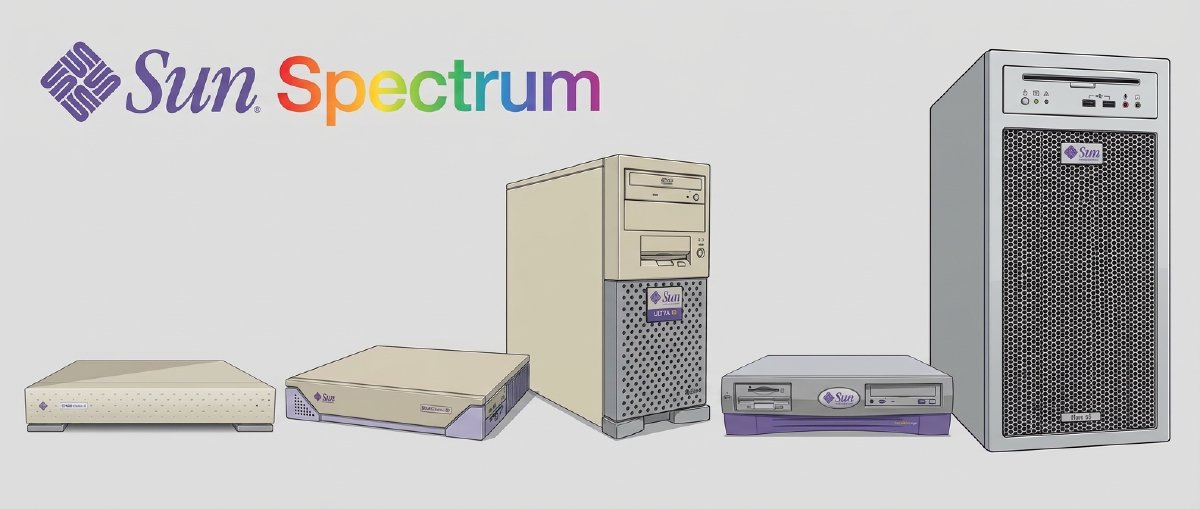
From classic 32-bit “pizza boxes” to the final aluminum UltraSPARC towers, here is a look back at the UNIX hardware that defined an era.
Before the modern PC dominated every desk, engineering labs, university basements, and early ISP’s ran on a very different breed of hardware. Founded in 1982, Sun Microsystems championed the motto “The Network is the Computer,” building UNIX machines prized for industrial design, rock-solid reliability, and raw technical muscle.
Spanning nearly two decades of architecture, form factors, and engineering milestones, these five Sun workstations—and a few unforgettable honorable mentions—stand out as my all-time favorites.
1. Sun SPARCstation 2 (1990)
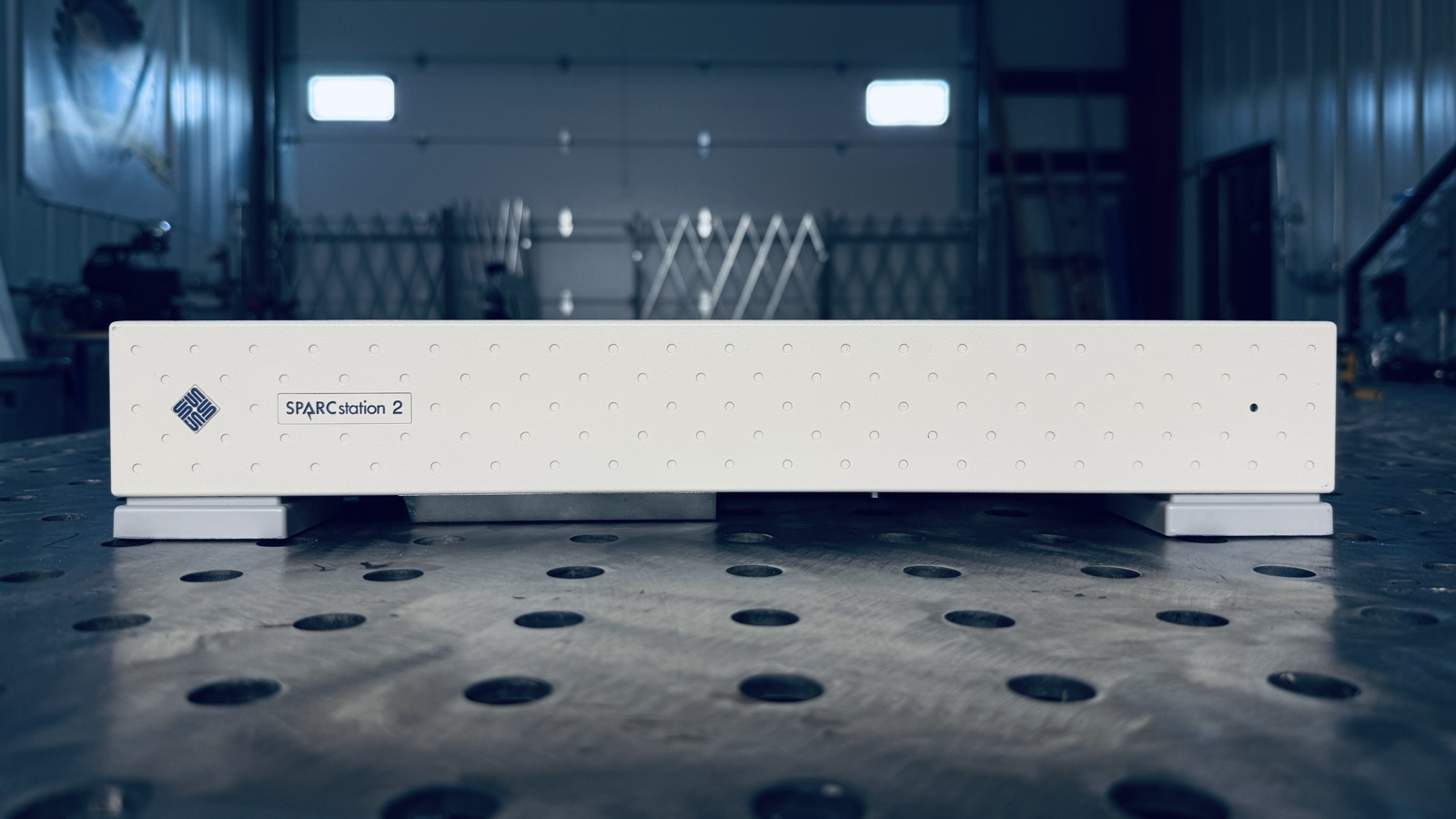
My initial introduction to Sun hardware began with the SPARCstation 2 alongside the SPARCstation IPC. Back in the late 1990s while working at a dial-up ISP, I stumbled upon a side office cluttered with idle machines, and our generous system administrator permitted me to haul several home to explore UNIX and SunOS. It became instantly obvious these were far superior to standard PCs—I was utterly captivated by their impeccable build quality and modular layout. From the exterior enclosure to the internal layout, every aspect of the SS2 was masterfully crafted to optimize desk space and streamline maintenance.
Polishing the famous “pizza box” design established by the SPARCstation 1, the SPARCstation 2 (internally dubbed Calvin) represented a significant upgrade in workstation processing power. Driven by a 40 MHz Cypress SPARC CPU—effectively twice the speed of its forerunner—it featured three SBus expansion slots, expansion up to 64 MB of system memory, and a dramatically faster feel when tackling software compilation, scientific calculations, and CAD environments. To classic UNIX enthusiasts, the SS2 remains the essential Sun desktop experience.
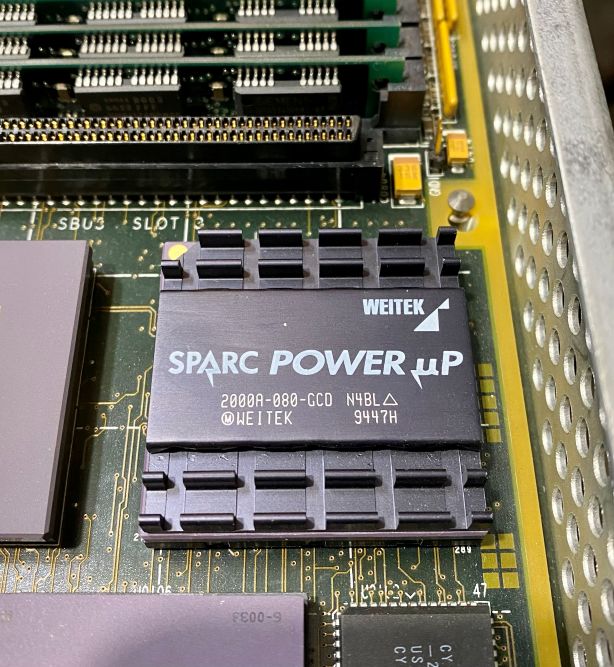
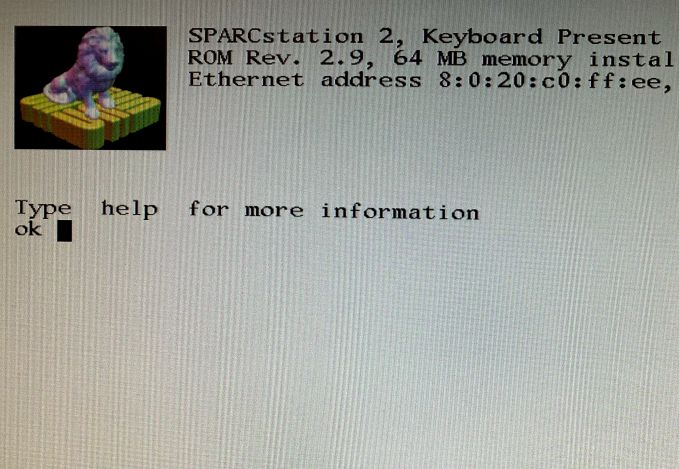
Photo notes: The legendary Weitek PowerUP processor upgrade nearly doubled SS2’s processing power by running the internal CPU clock at an impressive 80 MHz. Pictured alongside it is the ZX (Leo) 2D/3D graphics card OBP banner. Installing one of these high-end framebuffers into an SS2 made it possible to run Solaris with a 24-bit true-color desktop environment.
Honorable Mention: Sun SPARCstation IPX (1991)
Nicknamed the “lunchbox” for its taller, narrower cube-like chassis, the IPX crammed nearly all the 40 MHz performance of the SS2 into a fraction of the desk footprint, complete with built-in GX accelerated 2D graphics. You could even throw in a Weitek PowerUP CPU upgrade and the 64MB SBUS expansion card, bringing the total system ram to 128MB’s.
2. Sun SPARCstation 20 (1994)
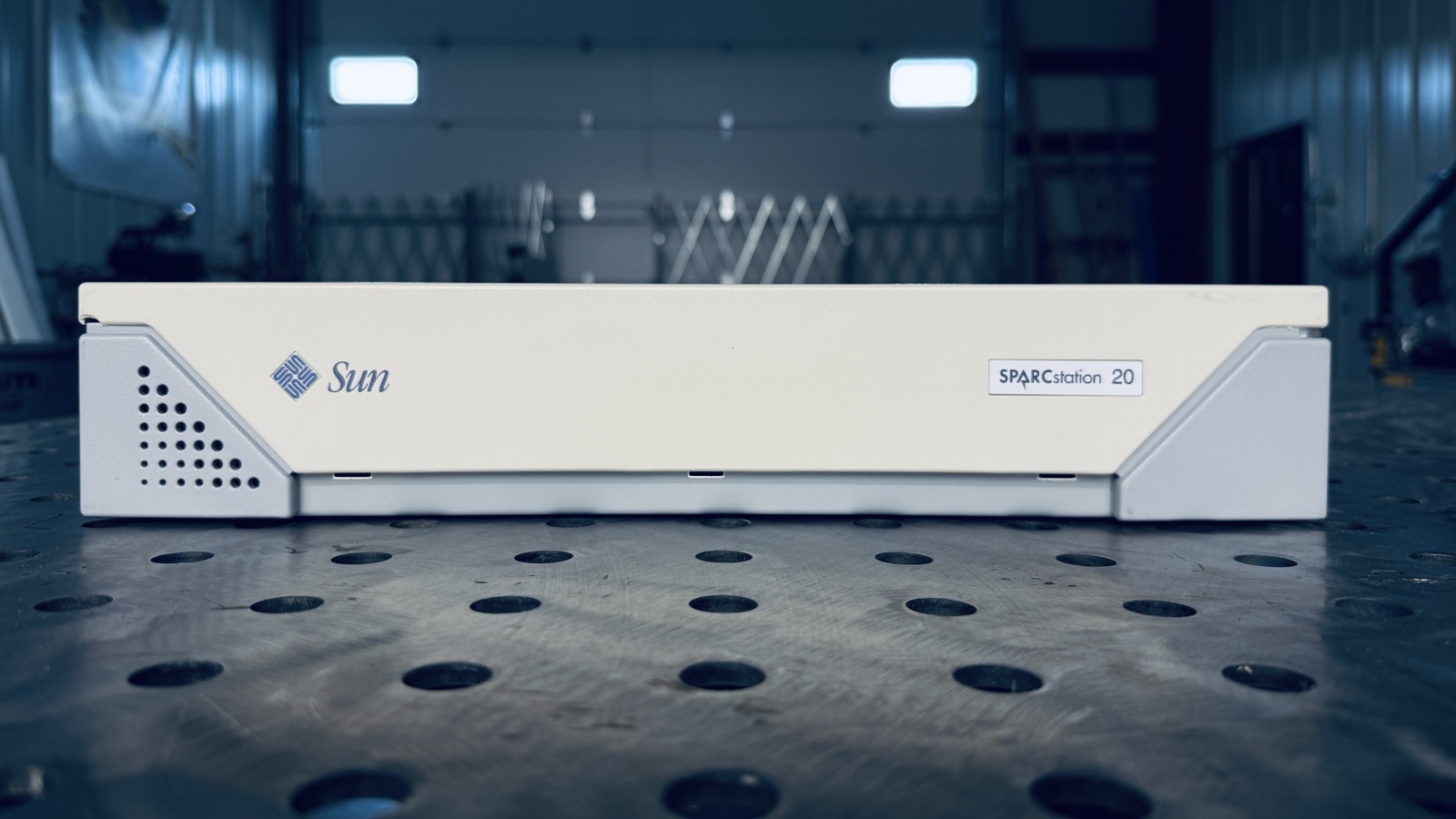
A standout moment for me was launching Red Hat Linux on this machine for the first time—seeing four tux penguins grace the screen to represent its quad 200 MHz ROSS HyperSPARC CPUs was absolute magic. It truly defined the golden age of 32-bit pizza box architecture.
Serving as the ultimate evolution of Sun’s 32-bit generation, the SPARCstation 20 (codenamed Kodiak) squeezed staggering performance into its slim enclosure. Thanks to dual MBus expansion slots, it could house up to four SuperSPARC II or HyperSPARC processors, while supporting 512 MB of RAM and four expansion SBus cards—effectively bridging the gap between high-end desktop workstations and departmental servers. Equipped with SX (CG14) framebuffers, the SS20 established itself as a legendary powerhouse for multi-threaded processing and demanding technical tasks.
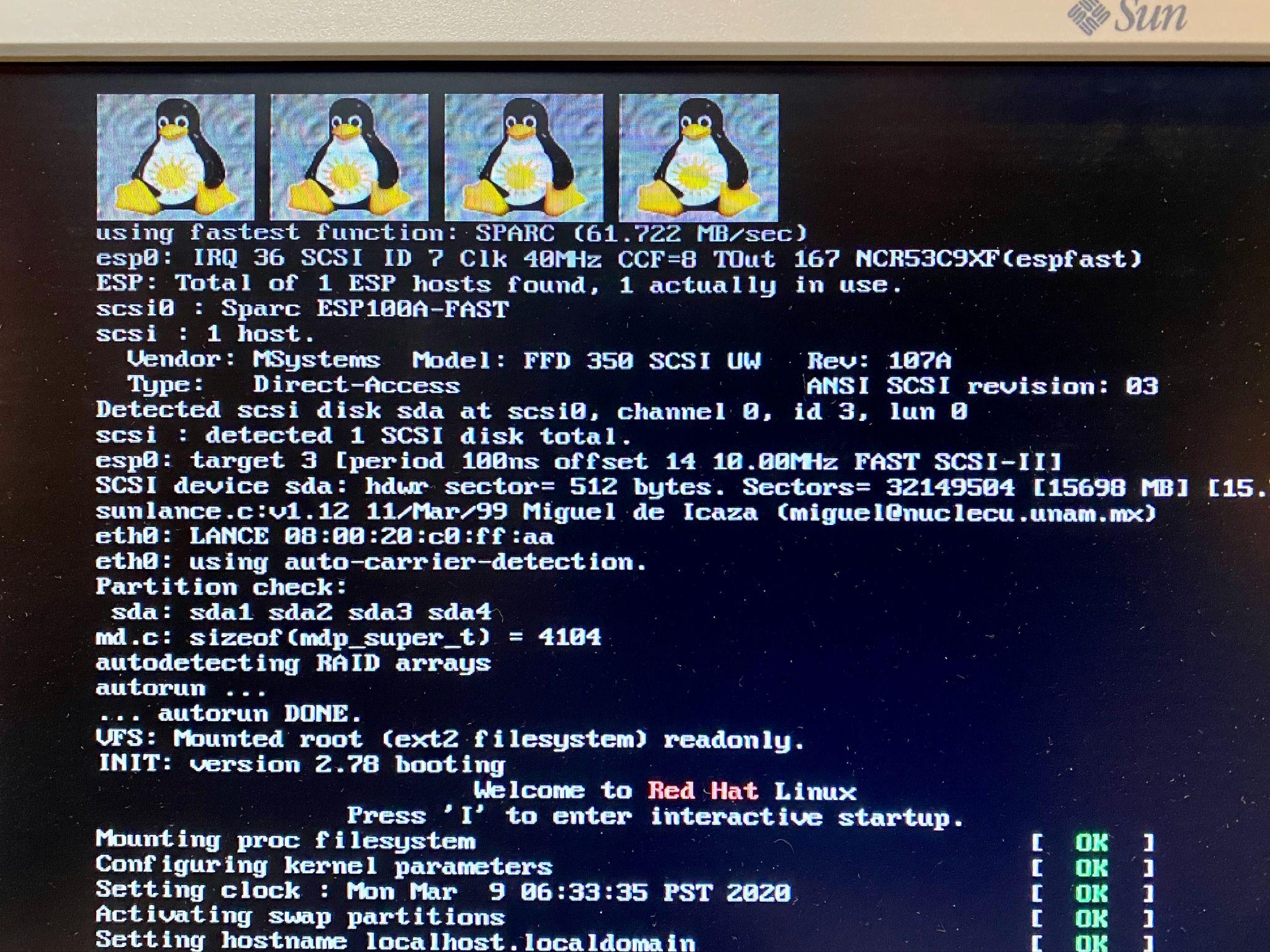
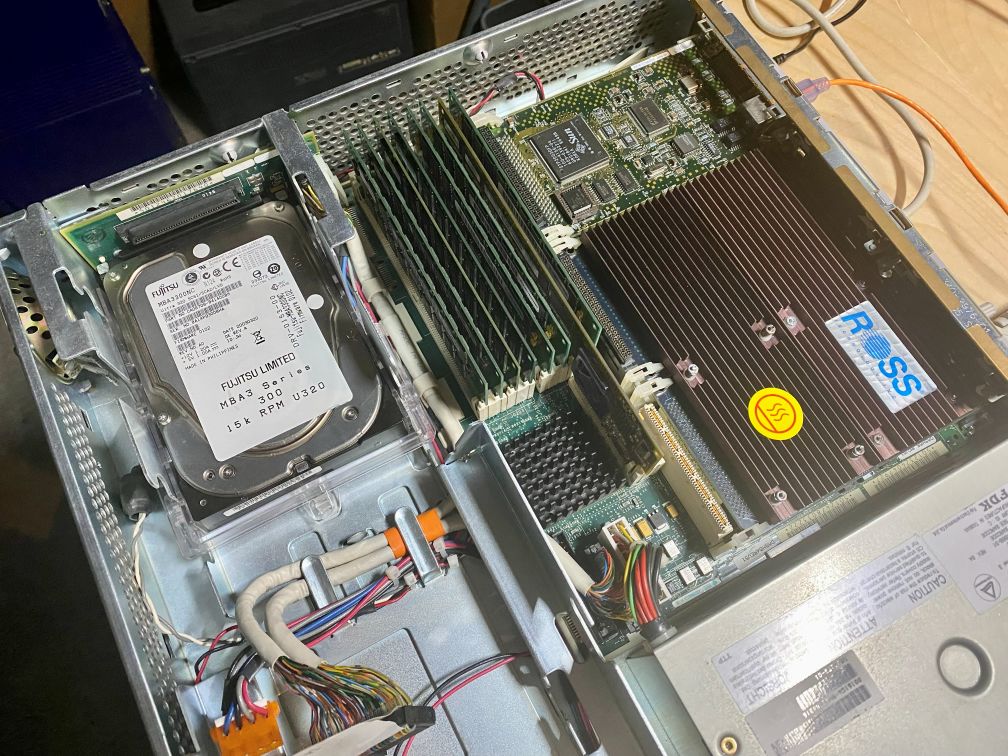
Photo notes: Four tux penguins = 4 times the fun! My actual machine with the dual-width dual 200MHz CPU MBUS modules, along with a full boat of ram and an 8MB VSIMM. You could fry an egg on those CPU modules!
Honorable Mention: Sun SPARCstation Voyager (1994)
This was technically Sun’s first and only portable workstation designed and manufactured in house. Built for the “nomadic” engineer, this rare, ultra-sleek all-in-one workstation combined a 60 MHz microSPARC-II processor, an integrated flat-panel display (available in active-matrix color or monochrome), PCMCIA slots, and optional battery power—delivering true desktop-class Solaris performance in a portable form factor.
3. Sun Ultra 10 (1998)
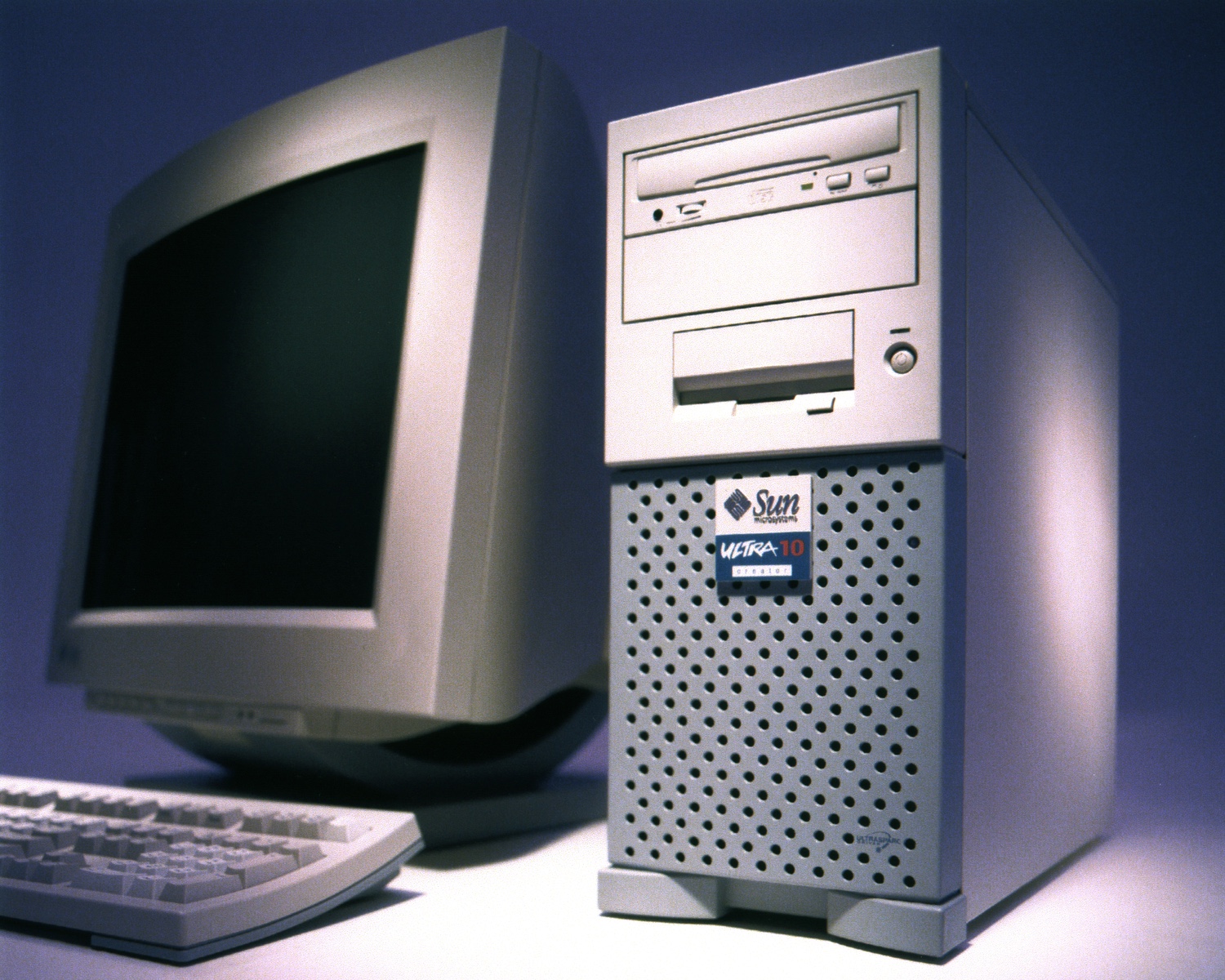
Around the turn of the millennium, I spent nearly two years relying on a Sun Ultra 10 running Solaris 7 as my primary daily system, customized with a tweaked Afterstep desktop layout. Outfitted with a Creator3D framebuffer, it also housed a SunPCi card for seamlessly dropping into a Windows environment whenever necessary. I even managed to successfully push the hardware further by upgrading and overclocking processor speeds for both the Ultra workstation and the internal SunPCi board.
During the late 1990s, Sun executed a strategic design shift with its Darwin series, introducing the slim desktop Ultra 5 alongside the mid-tower Ultra 10. Aiming to aggressively match Windows NT systems on price, Sun paired 64-bit UltraSPARC IIi chips with commodity PC hardware including standard PCI expansion, IDE drives, and ATI video accelerators. Though hardware traditionalists originally questioned the budget-friendly components, the Ultra 10 retained authentic Sun graphics capabilities via its UPA slot—turning both entry-level platforms into beloved, affordable classics for programmers and retro enthusiasts alike.
Honorable Mention: Sun Ultra 60 (1997)
For users who needed heavy-duty 64-bit muscle without compromises, the Ultra 60 bridged the gap between the budget Darwin line and Sun’s high-end servers, offering dual UltraSPARC II processors, dual UPA graphics slots for Elite3D or Creator3D cards, and enterprise-grade SCSI storage in a rugged mid-tower chassis. These things are built like tanks!
4. Sun Blade 150 (2002)
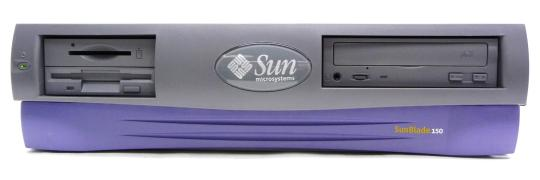
Having collected several units throughout the years, I find the unique industrial aesthetic of the Sun Blade 150 eye-catching. Best of all, these machines remain exceptionally affordable and accessible on the second-hand market. Locating a fully configured system outfitted with a 650 MHz UltraSPARC CPU and 2 GB of RAM usually costs merely a couple hundred dollars. Pair it with a modern solid-state drive, and it delivers a remarkably snappy Solaris 10 desktop environment.
At the turn of the new millennium, Sun updated its budget hardware lineup with the striking, purple-accented Sun Blade 150. Driven by 64-bit UltraSPARC IIi or IIe chips scaling up to 650 MHz, this machine revamped the entry-level experience by adopting integrated USB, IEEE 1394 FireWire, and commodity PCI expansion. Renowned for its whisper-quiet fan profile and small footprint, the Blade 150 quickly established itself across academic settings and engineering desks, delivering native Solaris environments minus the excess noise or heft of traditional UNIX mid-towers.
Honorable Mention: Sun Blade 2500 (2003)
Standing as the undisputed powerhouse of Sun’s Blade family, the Sun Blade 2500—offered in both traditional “Silver” and distinctive “Red” chassis variants—housed dual UltraSPARC IIIi CPUs, supported memory configurations up to 16 GB, and accommodated top-tier XVR 3D framebuffers inside a robust, silent tower engineered for demanding simulation and MCAD workloads. In my view, these colorful 2500 variants represent some of the most aesthetically stunning desktops Sun ever created.
5. Sun Ultra 45 (2006)
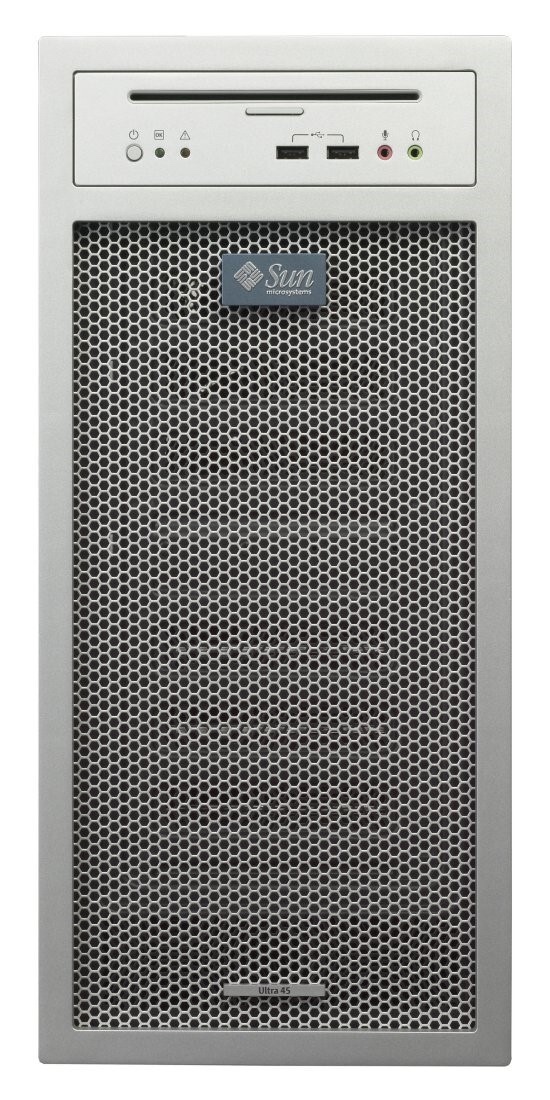
Transitioning into the x86 hardware era, Sun crafted a magnificent swan song for its flagship line of proprietary desktop architectures: the Ultra 45. Housed inside a brushed aluminum enclosure reminiscent of Apple’s iconic Power Mac G5, this machine featured dual 1.6 GHz UltraSPARC IIIi CPUs, memory expansion scaling up to 16 GB, modern PCI-Express bandwidth, and flexible SAS/SATA drive options. Working on one of these platforms is an absolute pleasure—it holds a special place as the ultimate, peak-performance SPARC workstation Sun ever released.
Fast forward to 2026 and a Raspberry Pi 5 costing just a couple hundred dollars and utilizing around 16 watts power at full load completely blows the Ultra 45 out of the water in terms of overall performance and efficiency.
Honorable Mention: Sun Ultra 27 (2009)
Purists might argue that featuring an x86 platform on this list feels like sacrilege, yet Sun maintained a long-standing history of experimenting with Intel architectures. Beginning with the Sun386i back in 1988 and extending through various SunPC and SunPCi coprocessor expansion boards, the company routinely catered to the Wintel market. Representing the most powerful x86 desktop platform Sun developed prior to the Oracle buyout, the Ultra 27 combined Intel Xeon 3500-series Nehalem CPUs with up to 24GB’s of ECC DDR3 RAM and enterprise NVIDIA Quadro graphics inside their legendary brushed aluminum chassis. They remain surprisingly budget-friendly on second-hand markets today, and its ATX-friendly case serves as a fantastic foundation for retro sleeper builds.
What’s your favorite piece of Sun kit? Whether you spent late nights writing code on an Ultra 10 or still keep a SPARCstation 20 humming in a home lab, drop a comment below and share your favorite Sun memories!