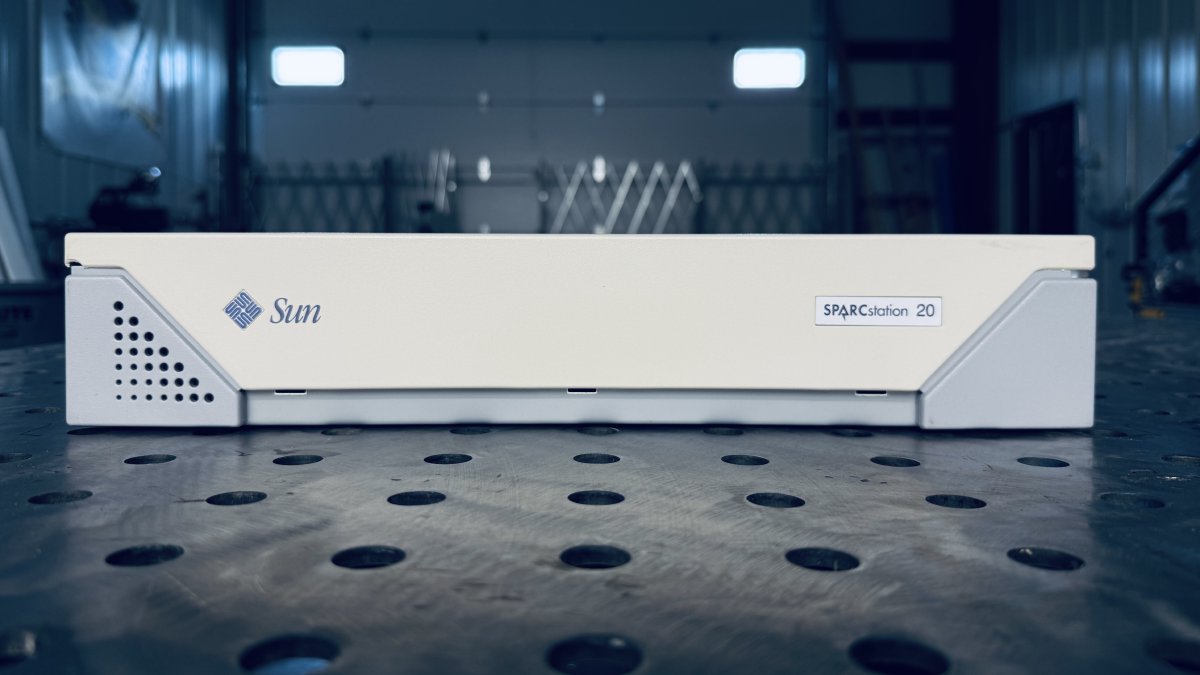
One of the questions I get asked fairly often through OldSilicon.com is what an old Sun workstation is worth. Usually it’s someone who has found a SPARCstation in a closet, inherited one, or is considering buying one.
I’ve restored quite a few of these machines over the years, and I’ve spent a fair amount of time watching what they sell for. So I thought I’d put together some thoughts on what constitutes a fair price.
First, a disclaimer: this isn’t a formal appraisal or a statistical analysis of completed sales. The market for vintage UNIX workstations is relatively small, and prices can vary wildly depending on the machine, its configuration, condition, and who’s looking for one at any particular moment.
But I do think there are some reasonable ranges.
What I Consider a Restored Workstation
Before talking about prices, it’s important to establish what I mean by “restored.”
For the machines in my collection at OldSilicon, I generally work toward a pretty specific standard:
- 95% or better cosmetic condition. Clean cases, minimal yellowing or damage, intact badges, original-looking finishes, and no significant cracks or missing pieces. I want these machines to look as close as practical to how they looked when they were new.
- 100% functional hardware. Not just a machine that powers on or reaches the OpenBoot prompt. The CPU, memory, graphics, networking, NVRAM, and other installed hardware should actually work.
- Reliable solid-state storage. I generally replace the original mechanical hard drives with ZuluSCSI RP2040 emulators. Thirty-year-old SCSI drives are increasingly unreliable, and I don’t consider a machine fully restored if its primary storage is one mechanical failure away from becoming unusable.
- A fully functional operating-system image. The machine should boot directly into a working SunOS or Solaris environment, with the appropriate graphics environment, networking, and useful software already configured.
- Repairs that address known problems. Dead timekeeper batteries, corrupted IDPROM contents, firmware problems, and other age-related failures need to be corrected, not ignored.
That’s the standard I have in mind when assigning the values below.
I’m not suggesting every collector needs to go this far. But there’s a substantial difference between buying a 30-year-old computer and buying a 30-year-old computer that someone has already spent considerable time making dependable again.
The Operating System Matters More Than You Might Think
One of the more frustrating parts of restoring old Sun machines isn’t necessarily getting the hardware working. It’s getting the operating system installed, configured, and actually useful.
For example, I generally run SunOS 4.1.4 on the older sun4c machines because it performs considerably better on those slower systems than later Solaris releases.
My newer SPARCstations generally run Solaris 2.6.
I’ve built and made available bootable disk images for most of the machines in my collection. These aren’t simply bare operating-system installations. Depending on the machine, they include configured graphical environments such as OpenWindows or CDE, development tools, networking adjustments, and fixes for various compatibility problems.
For the older SunOS machines, I’ve even addressed issues such as DNS resolution without NIS, something that can be surprisingly annoying when trying to use these systems on a modern network.
The ZuluSCSI setup makes it relatively easy to back up, duplicate, and restore these images. In practical terms, it means a machine can be ready to use within minutes rather than requiring someone to track down installation media and spend days configuring software.
I think that has real value.
You can find the images and installation notes in my ZuluSCSI Disk Images section.
My Estimated Values, November 2026
Here are the ranges I consider reasonable for clean, fully functional, restored examples of some common and not-so-common Sun workstations.
These estimates assume the restoration standard described above.
| Model | Estimated Fair Value |
|---|---|
| SPARCstation IPC | $300–500 |
| SPARCstation IPX (Weitek) | $450–700 |
| SPARCstation 1 | $350–550 |
| SPARCstation 2 (Weitek) | $500–800 |
| SPARCstation 5 (170 MHz) | $400–650 |
| SPARCstation 10 | $450–750 |
| SPARCstation 20 (ROSS hyperSPARC) | $650–1,000 |
| Ultra 1 Creator | $300–500 |
| Ultra 5 | $200–350 |
| SPARCstation Voyager (restored LCD) | $900–1,500 |
These estimates are for the computers themselves. Period-correct monitors, keyboards, mice, and other accessories can add significant value, particularly when they’re in good condition.
They’re also estimates, not guaranteed selling prices. In a market this small, finding the right buyer can matter as much as the machine itself.
What Makes One Worth More?
There are several things I think justify a premium.
First, demonstrated functionality. A machine that reliably boots SunOS or Solaris, has working graphics and networking, and can actually run software is worth more than one that merely passes its power-on self-test.
Second, unusual configurations. My SPARCstation 2, for example, has an 80 MHz Weitek PowerUp processor and a fully populated 64 MB DataRAM SBus card. My SPARCstation 20 has a 125 MHz ROSS hyperSPARC processor. These aren’t necessarily configurations you’ll find in the first machine that turns up on eBay.
Third, restoration quality. On some machines I’ve modified the original timekeeper chips to use replaceable batteries, reprogrammed IDPROM contents, updated OpenBoot firmware, and fabricated custom mounting hardware for modern storage. These are repairs and improvements that should keep the machines functional for years.
Fourth, cosmetic condition. I put a lot of effort into finding clean examples. Yellowed plastic, broken bezels, missing badges, and damaged cases are difficult to correct. A machine that looks nearly new is much harder to find than one that simply works.
And finally, a ready-to-use software environment. I think people underestimate how much time can be involved in getting a vintage UNIX machine to the point where you can actually sit down and enjoy using it.
What About Untested Machines?
As a rough rule of thumb, I’d value an untested or incomplete machine at perhaps 40–60% of what a comparable restored example might bring.
A reasonably complete machine that boots but hasn’t been thoroughly tested might be worth 65–85%.
Of course, these aren’t hard rules. A rare machine with a dead power supply might still be worth more than a perfectly functional but common model.
And a machine advertised as “powers on” should generally be treated as untested. Seeing an LED illuminate or hearing a fan spin tells you very little about the condition of the rest of the system.
The Restoration Problem
Here’s the part that makes this hobby a little irrational.
If I actually accounted for the time I spend restoring these computers, most would be worth thousands of dollars.
I’ve spent entire weekends tracking down obscure hardware problems, fabricating replacement parts, repairing electronics, burning firmware, and getting operating systems running.
My SPARCstation Voyager is a particularly good example. Restoring it involved replacing the failing LCD, engineering the video interface, fabricating mounting components, and getting the machine running reliably again. That’s considerably more work than cleaning up an old computer and replacing its hard drive.
Nobody is going to pay me an hourly rate for that work.
And that’s fine. I don’t restore these machines to make money. I do it because I enjoy the engineering, the history, and the satisfaction of bringing something back to life that otherwise might end up in a landfill.
There’s also something particularly satisfying about sitting down in front of a machine from 1990, powering it on, and having it behave like a perfectly normal, usable computer.
Even if it’s not particularly fast by modern standards.
So What’s a Fair Price?
Ultimately, I think the biggest mistake people make is treating every old Sun workstation as interchangeable.
A dusty SPARCstation 10 that’s been sitting in a garage for 25 years isn’t the same thing as a cosmetically excellent, fully functional SPARCstation 10 with modern reliable storage and a properly configured Solaris installation.
They’re two very different propositions.
The market is small enough that prices will always be somewhat subjective. But I think a reasonable restoration premium is justified, especially for someone who wants to experience these computers rather than spend months repairing them.
And one final observation: just because someone sold a SPARCstation for $150 on eBay doesn’t mean that’s what every SPARCstation is worth.
Sometimes it just means somebody got a really good deal.
These are my personal estimates as of November 2026, not formal appraisals. If you’ve bought or sold restored Sun workstations recently, I’d be interested in hearing what you paid and what condition they were in. More actual transaction data would make these estimates better.