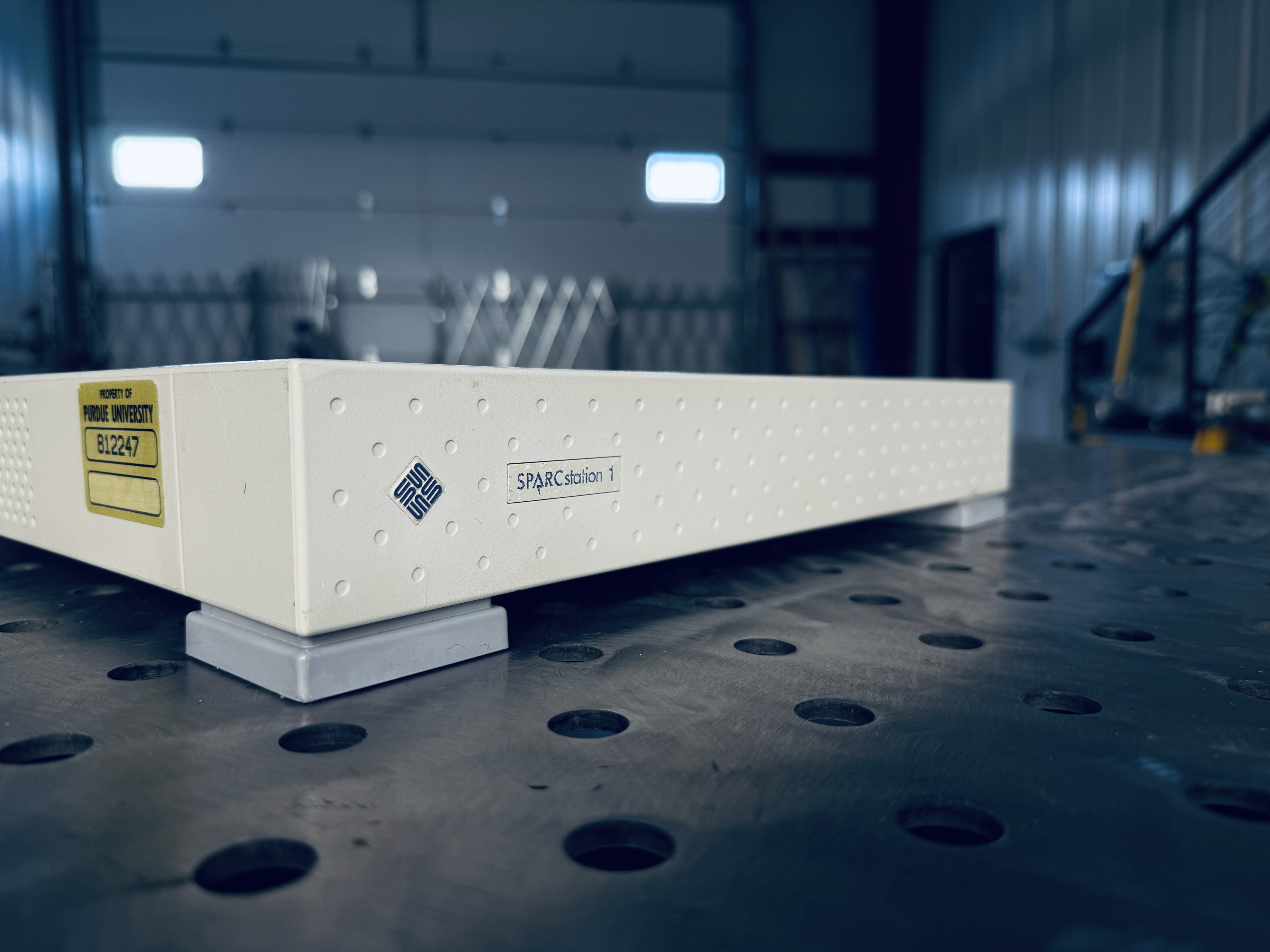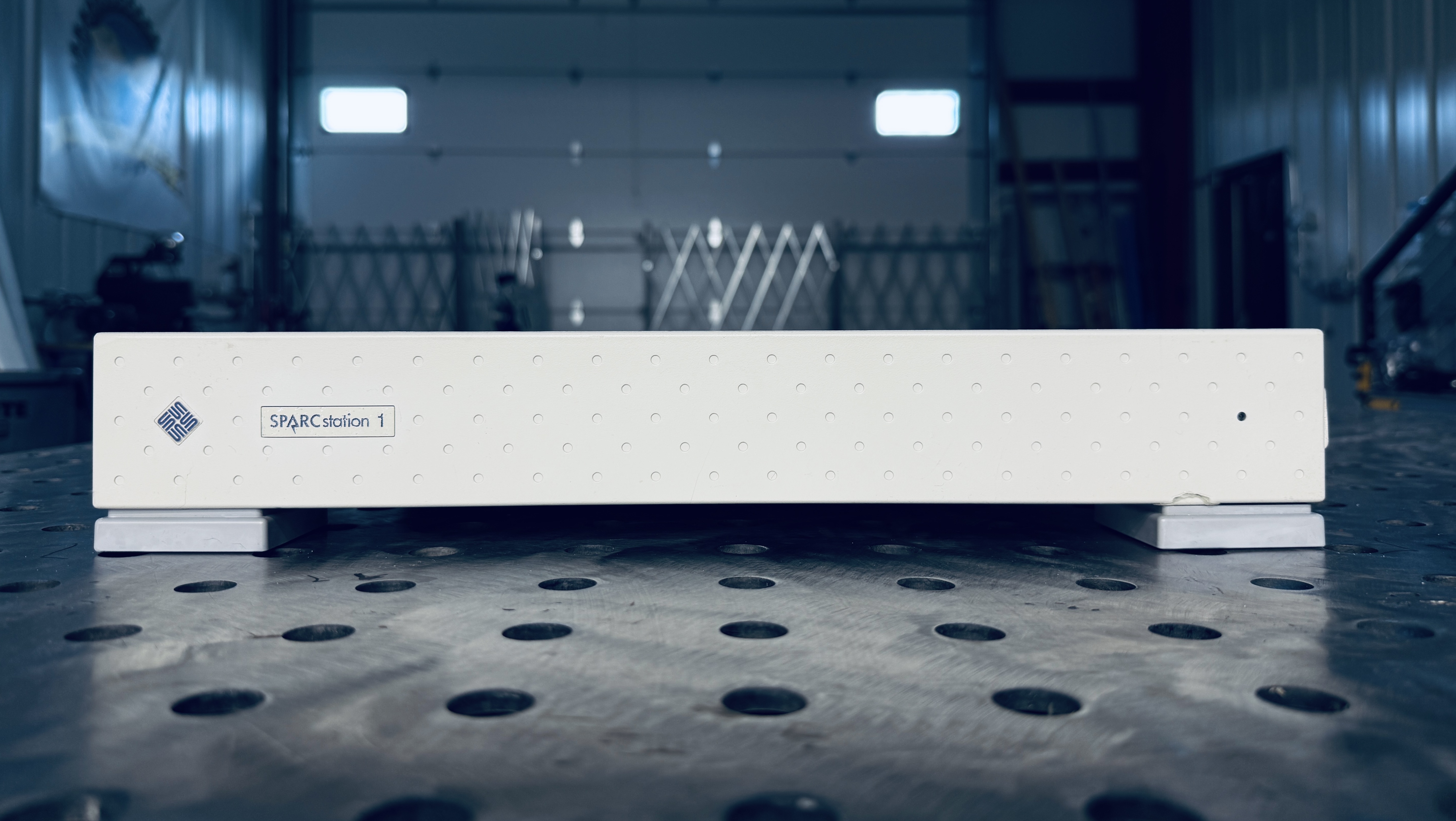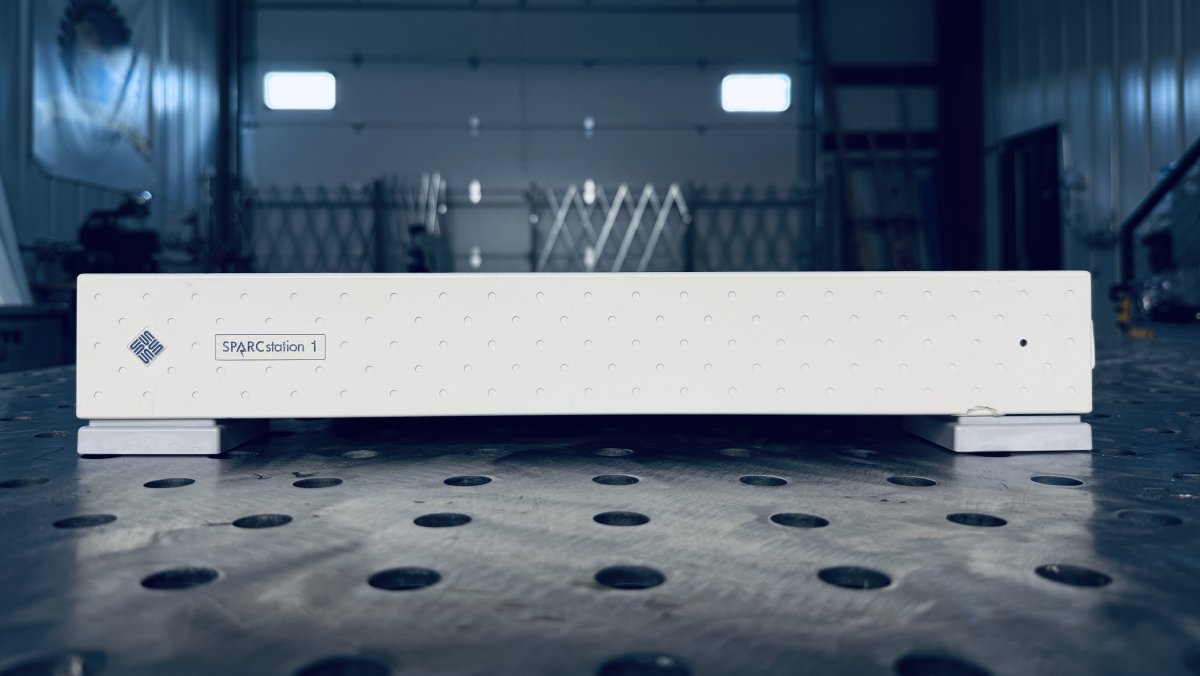
The SPARCstation 1, code-named “Campus,” was introduced in April 1989 and became Sun’s first “pizza box” workstation. It marked a dramatic departure from the larger VME-based Sun-3 and Sun-4 systems that preceded it, establishing the compact desktop form factor that would define Sun workstations for the next decade. The SPARCstation 1 was also the first desktop SPARC system, bringing the performance of Sun’s RISC architecture to an affordable, space-efficient package.
History
The SPARCstation 1 arrived at a transformative moment in workstation computing. Prior to its release, Unix workstations were large, expensive machines built around VME card cages. The SPARCstation 1 changed that equation by packaging a complete workstation into a compact enclosure roughly the size of a large pizza box.
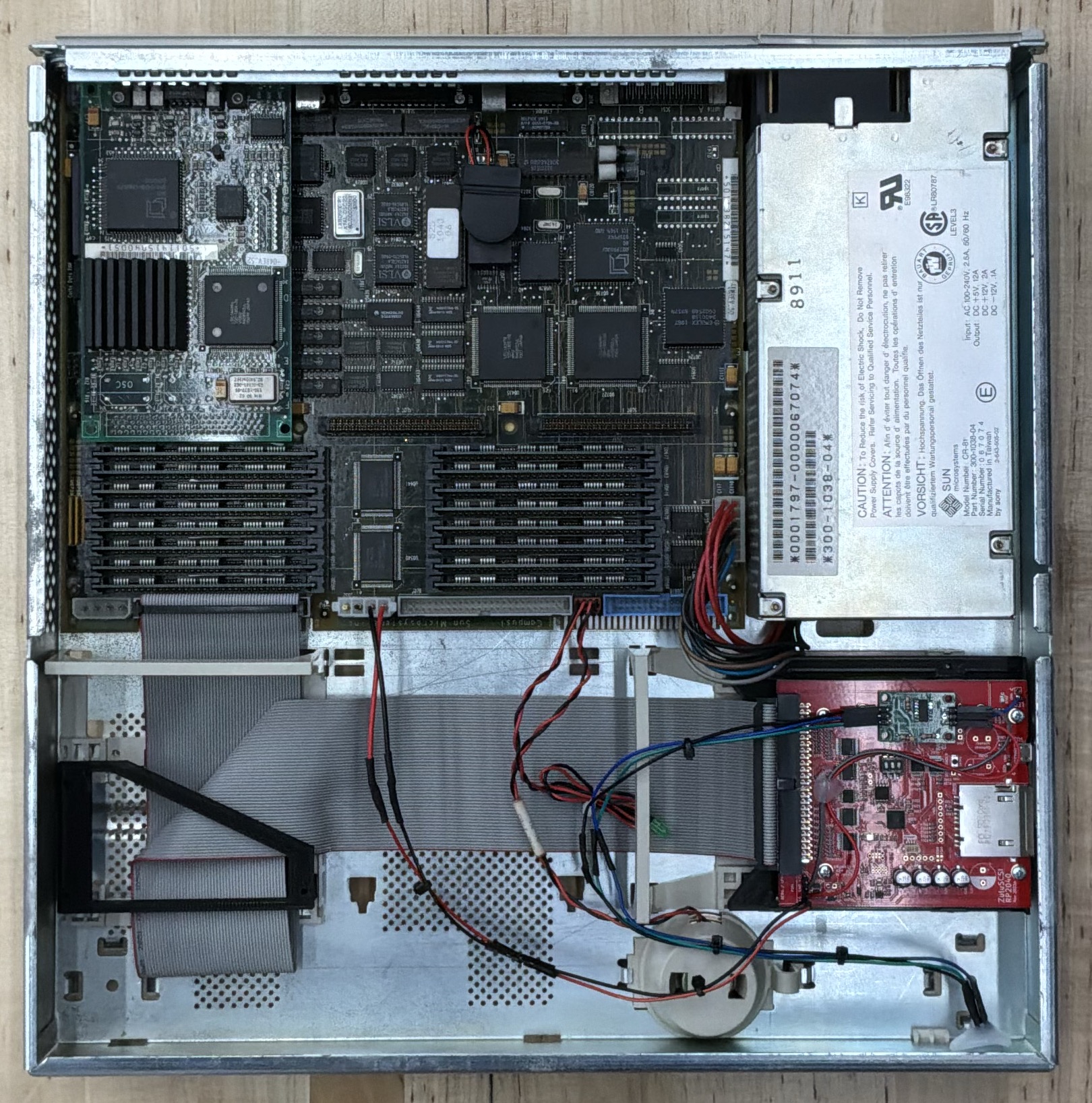
Running at 20 MHz with the LSI L64801 or Fujitsu MB86901A SPARC processor, the SPARCstation 1 delivered approximately 12.5 MIPS—competitive with much larger and more expensive systems. It supported up to 64 MB of RAM via SIMMs and featured Sun’s new SBus expansion architecture, which replaced the older VME bus with a more compact and efficient interconnect.
The machine was enormously successful in university and research environments. Its combination of Unix power, TCP/IP networking, and NFS file sharing made it an ideal departmental workstation. Many engineers and scientists who came of age in the early 1990s cut their teeth on SPARCstation 1 systems running SunOS 4.x.
Sun also produced the SPARCstation 1+, a minor revision that increased the processor speed to 25 MHz and offered improved integer performance. Both machines share the same chassis and are architecturally identical aside from the faster clock.
Acquisition
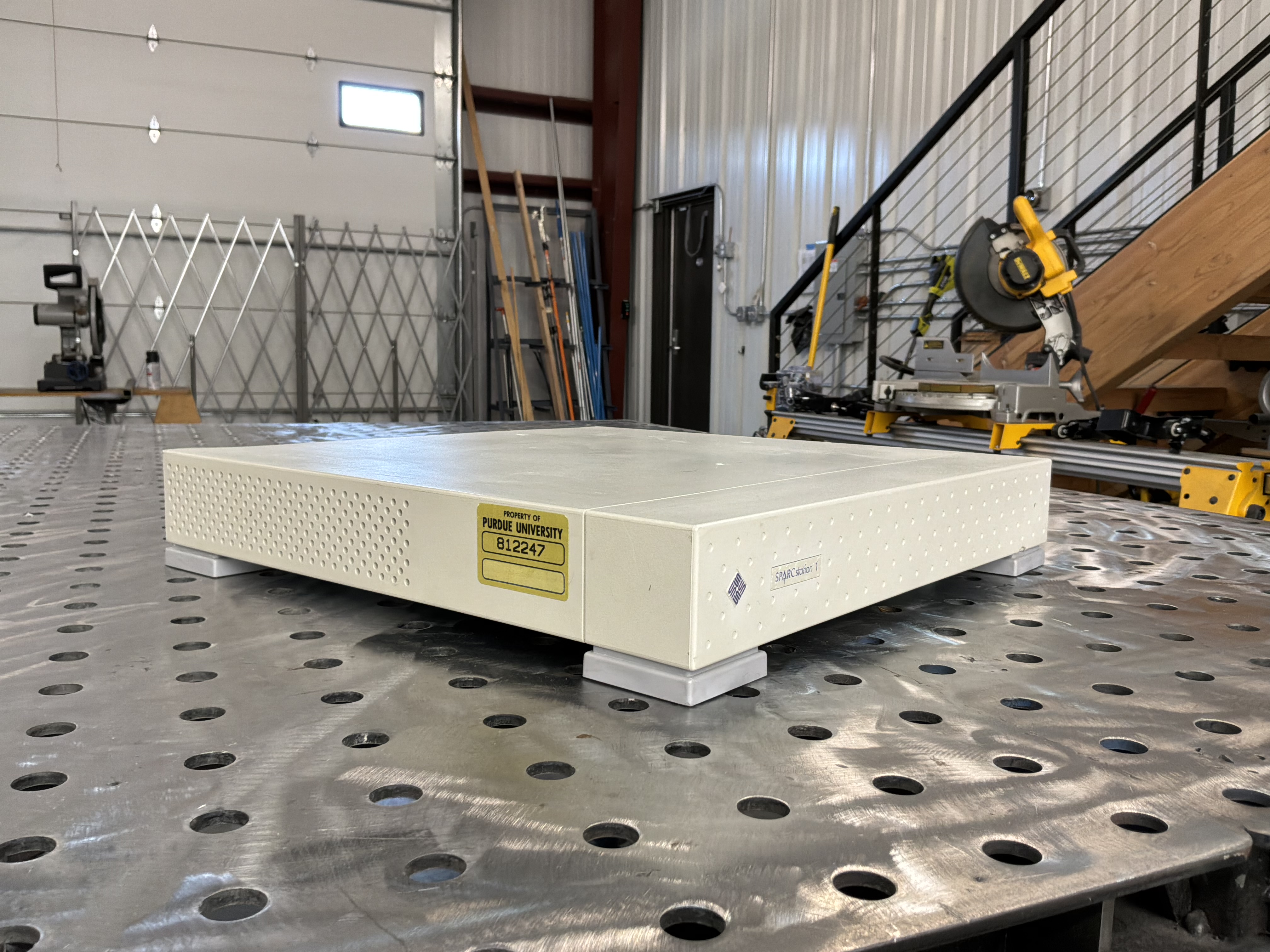
This machine has an unusual history. I originally purchased a SPARCstation 1 on eBay that had spent its working life at Purdue University—the gold asset tag (BI 2247) is still attached to the chassis. When the machine arrived, I discovered that while the chassis and plastic were genuine SPARCstation 1, the motherboard inside was actually a SuperWorkstation SW-40S—a third-party SPARCstation 2 clone board. Someone at Purdue had upgraded the internals, which makes sense for a university looking to get more compute out of existing hardware without buying a new machine.
I ran the box that way for years. It worked fine, but I really wanted an actual SPARCstation 1. One day a genuine SS1 motherboard came up on eBay, so I bought it and restored it with the usual procedures—new timekeeper chip, IDPROM reprogramming—and installed it in the original Purdue chassis. That returned the entire assembly into a real SPARCstation 1 for the first time in probably decades.
The displaced SW-40S clone board went on to become its own project. You can see what became of it in the SuperWorkstation SW-40S article.
Restoration
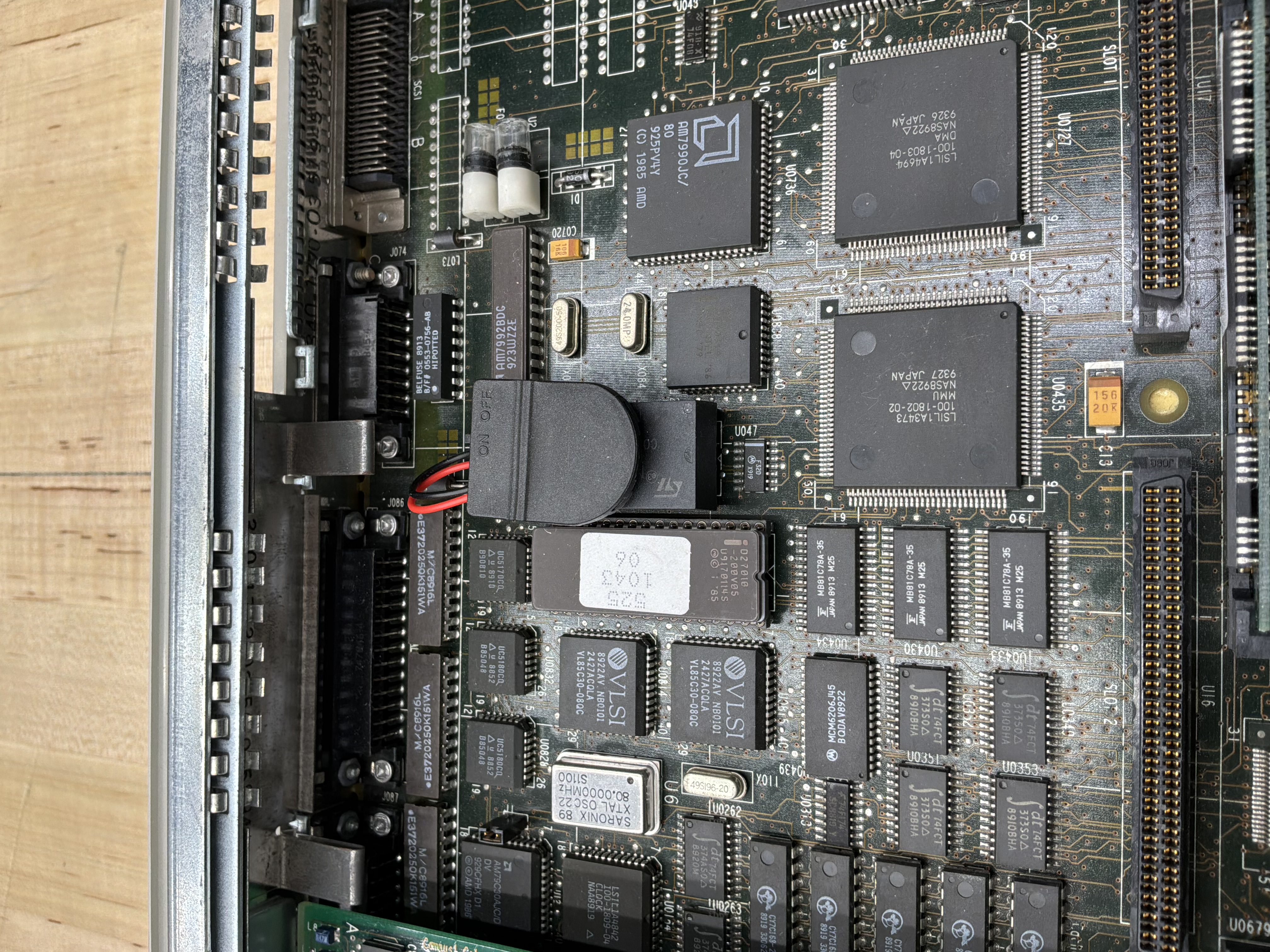
With the genuine SS1 board in hand, getting the machine running was straightforward. The timekeeper chip was dead, as they always are, so I did the usual M48T02 modification with an external coin cell battery. After reprogramming the IDPROM and burning a new OBP 2.9 PROM to support the CG6 TGX+ framebuffer, the machine booted SunOS 4.1.4 cleanly.
The chassis itself was in excellent condition, having been well cared for at Purdue. The original Sun branding, ventilation grilles, and rubber feet are all intact. It’s a clean, honest example of the machine that started the pizza box era.
3D-Printed Parts
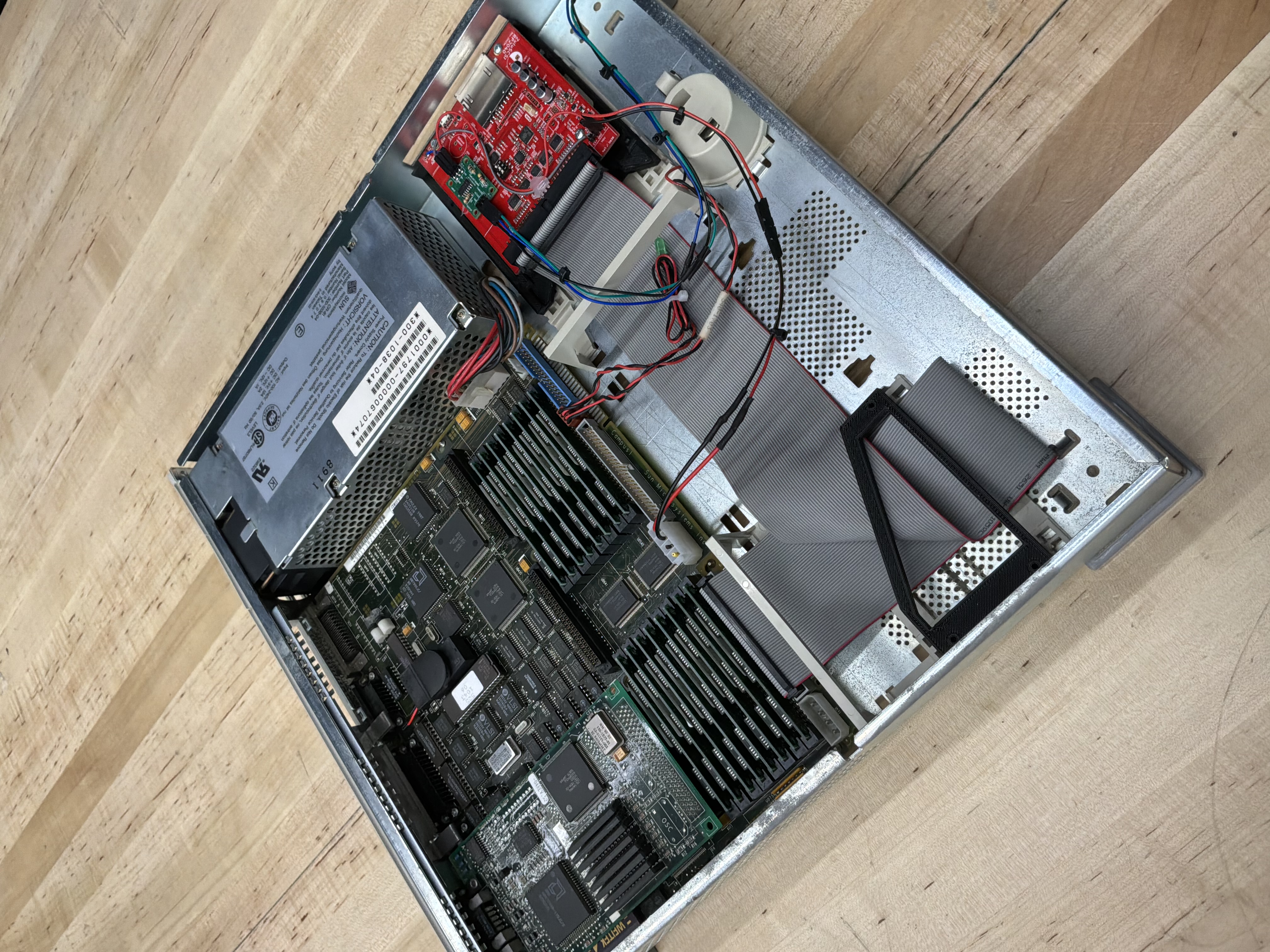
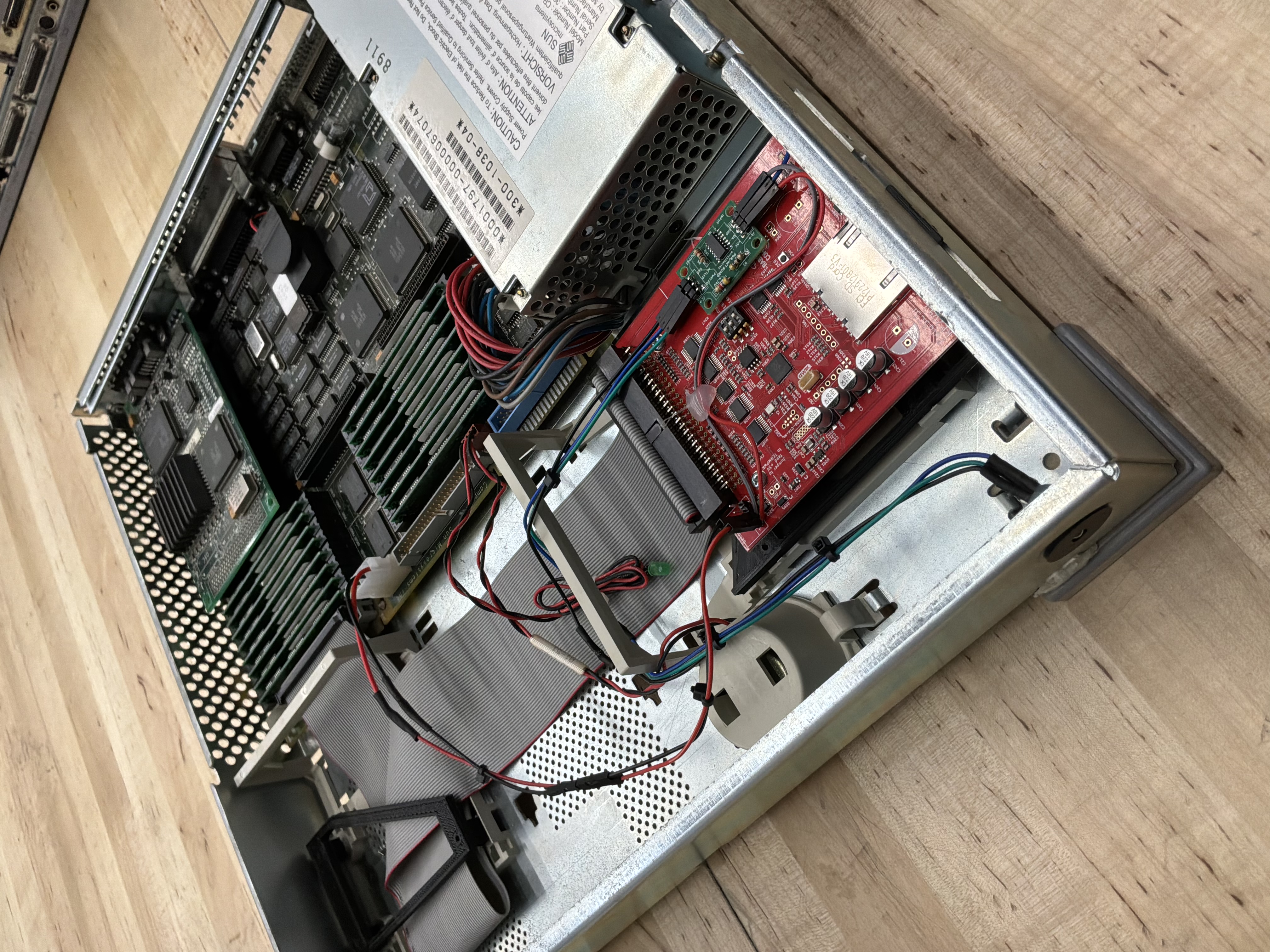
If you’re fitting a ZuluSCSI to the SS1 floppy bay, the mount I designed for the SS2 fits the SS1 chassis unchanged:
- Floppy Bay ZuluSCSI Mount — Adapts the floppy bay to hold a ZuluSCSI board (the older SCSI2SD shares the same footprint, hence the filename).
Specifications
| Attribute | Value |
|---|---|
| Release Date | April 1989 |
| Model | 4/60 / Code-named “Campus” |
| CPU | LSI L64801 @ 20 MHz |
| Architecture | Sun4c / OBP 2.9 |
| RAM | 64Mb |
| OS | SunOS 4.1.4 |
| Graphics | SBus: CG6 TGX+ Double Buffer (4M mappable) 1280x1024@76 |
| Environment | OpenWindows 3.0_414 / X11R5 / X11R6 / Motif 1.2 |
| Disk Image | 2.1 GB SCSI / ZuluSCSI RP2040 |
Useful Documents
cmacs: Cross-Platform Terminal Editor - A portable editor built on the same C++ library used for the compile time benchmarks.
SPARCstation 1+ Field Service Manual (PDF) - Sun’s official field service manual for the SPARCstation 1+. Covers diagnostics, component identification, and repair procedures applicable to SPARCstation 1 series systems.
Trust Me, You Want SunOS 4.1.4 on Your Older Sun Boxes - Why SunOS 4.1.4 still feels faster than Solaris 2.6 on classic SPARCstations — the BSD vs SVR4 STREAMS story behind the difference.
Getting SunOS 4.1.4 Working - Installation and configuration guide for SunOS 4.1.4 on Sun4c systems.
SunOS DNS without NIS - Patching libc to enable DNS name resolution without NIS on SunOS 4.1.x.
Fixing Corrupted TOD Clock on SunOS 4.1.4 - Resolving time-of-day clock errors caused by dates beyond the original epoch on SunOS.
Resetting IDPROM on Sun Workstations - Procedure for reprogramming the IDPROM after a timekeeper chip replacement.
Interactive Sun IDPROM Reset Tool - Pick your model and copy the exact
mkpcommands for theokprompt — fresh MAC address generated automatically.Locked Out: Clearing the Firmware Password - Bypassing a phantom firmware password caused by corrupt NVRAM in the timekeeper chip.
M48T02 Timekeeper External Battery Mod - Adding an external battery to a dead timekeeper chip to restore NVRAM and clock function.
Last OBP Firmware Versions - Reference table of the final OpenBoot PROM versions available for each Sun workstation.
Burning a New SPARCstation 1 PROM - Walkthrough of burning an OBP PROM using a MiniPRO TL866II Plus programmer.
Sun Boot ROM and Firmware Images - Downloadable OBP and firmware images for Sun workstations and servers.
Sun Hardware Reference Guide - Comprehensive reference for Sun workstation hardware specifications and part numbers.
ZuluSCSI Overview - Overview of ZuluSCSI SCSI emulator boards used across the collection.
ZuluSCSI Disk Images - Setup and configuration of ZuluSCSI disk images for vintage workstations.
Disk Image
A bootable SunOS 4.1.4 disk image is available for this system, configured for use with ZuluSCSI SCSI emulators.
Download: HD3_SunOS_4.1.4_SWS_PROTO_512.img.gz
SHA1: ef78faba0ccc307ed8f12d2c1762f4cd674c9532
For setup instructions, see the ZuluSCSI Disk Images overview. For image-specific notes (patched DNS-without-NIS libc, Motif 1.2 + mwm, X11R5/R6/OpenWindows, preinstalled GNU tools and gcc 2.8.1), see the SunOS 4.1.4 Disk Image Notes. Before booting, verify the SHA1 — see Image Security and Checksums.
Gallery