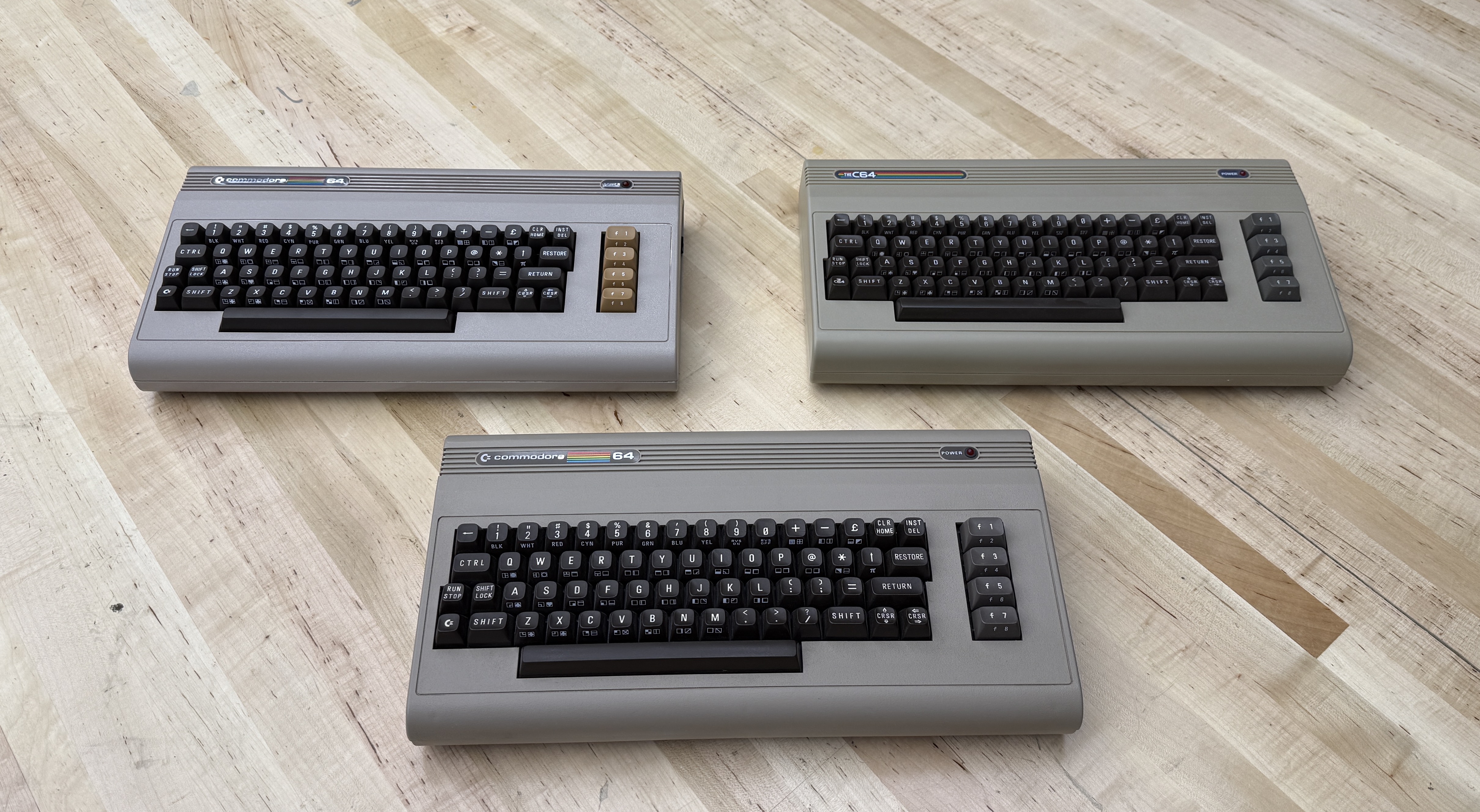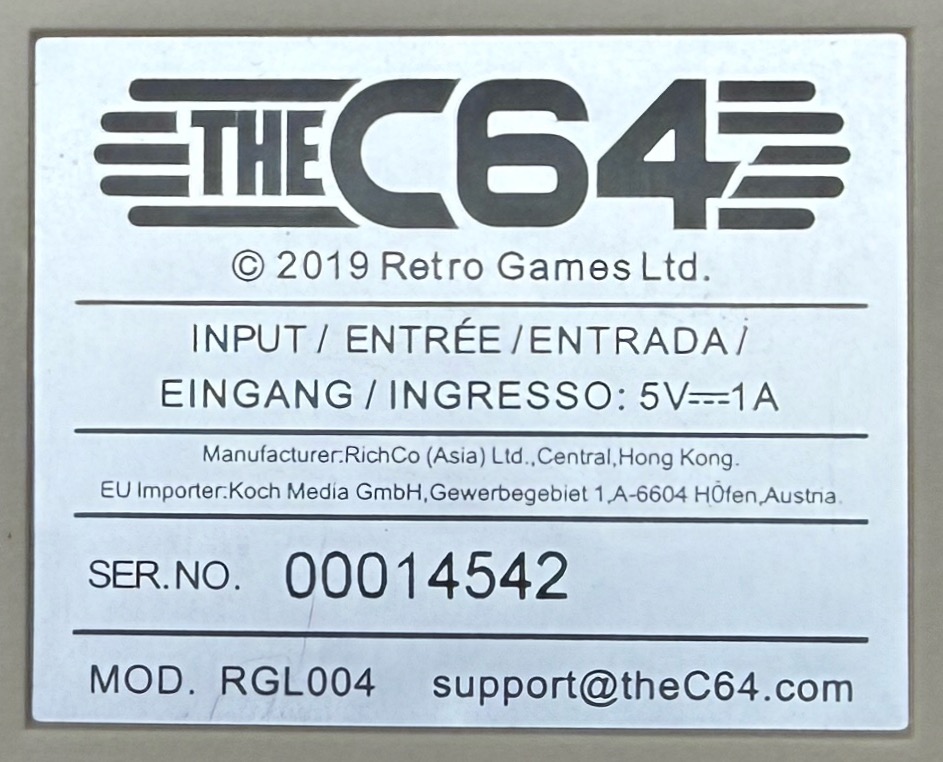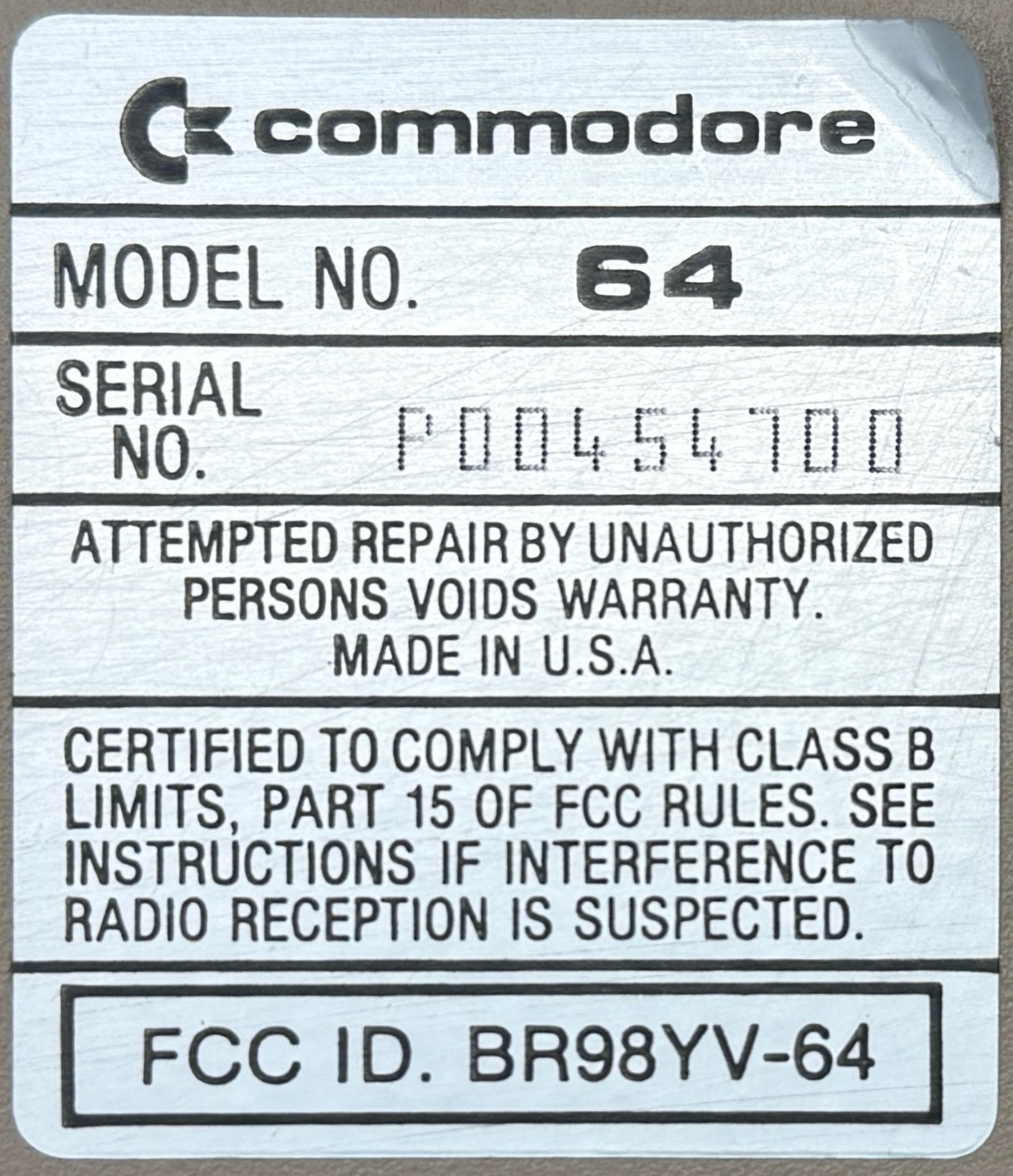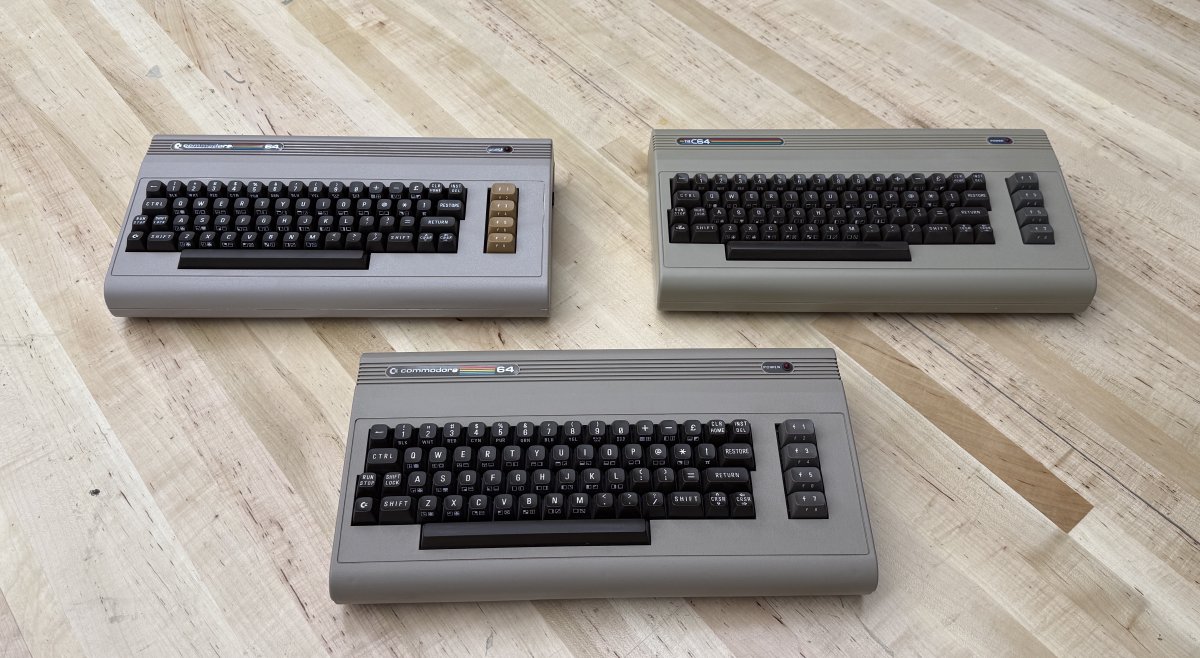
Three machines that all call themselves Commodore 64s, on the bench: the brand-new Commodore 64 Ultimate (FPGA, shipped 2025), the original breadbin I bought in college and finally restored in 2017, and a TheC64 from Retro Games Ltd.
If you’re here for a gamer’s-eye review of any of them (game libraries, save states, how Bubble Bobble feels on a couch), skip to the bottom; I’ve linked the good ones there. This article is for people who care about the silicon, the ports, the keyboard, and what you can actually plug into the back.
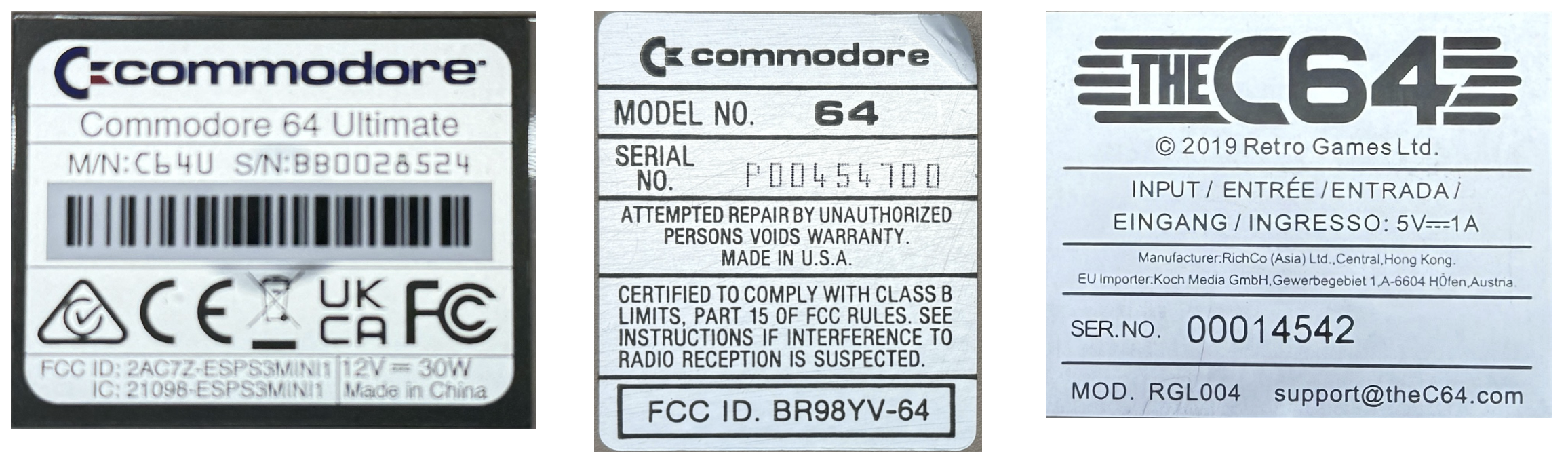
Two of them are real Commodore 64s in any meaningful sense. The third is a Linux box in a 64-shaped costume, a software emulator on an ARM SoC with no real silicon, no real ports, nothing you’d actually plug a 1541 or a cartridge into. So this isn’t a three-way review. It’s a head-to-head between my own restored breadbin and Gideon Zweijtzer’s FPGA recreation. TheC64 gets a brief mention later for people who’d otherwise wonder where it fits, and then I’m setting it aside.
Before I get into the run-off, a bit of personal history, because the C64 isn’t really a games machine to me and never has been.
Why I care about this machine
I taught myself to code on a C64 in college: BASIC, then Blitz! BASIC, plus 6510 assembly on the side. That assembly grounding (concepts more than any specific instruction set) is what got me in the door at NASA Dryden a few years later, on the X-29 flight-test program. I tell that story properly in the breadbin restoration write-up. The short version is the C64 was never a games machine to me. It was the tool that happened to be sitting on my desk when I figured out what I wanted to do with the rest of my life.
So when I look at these three machines, I’m not evaluating them as game systems. Here’s how they actually compare, with a bit of history about how each one came to exist.
The Original — what we're really comparing against
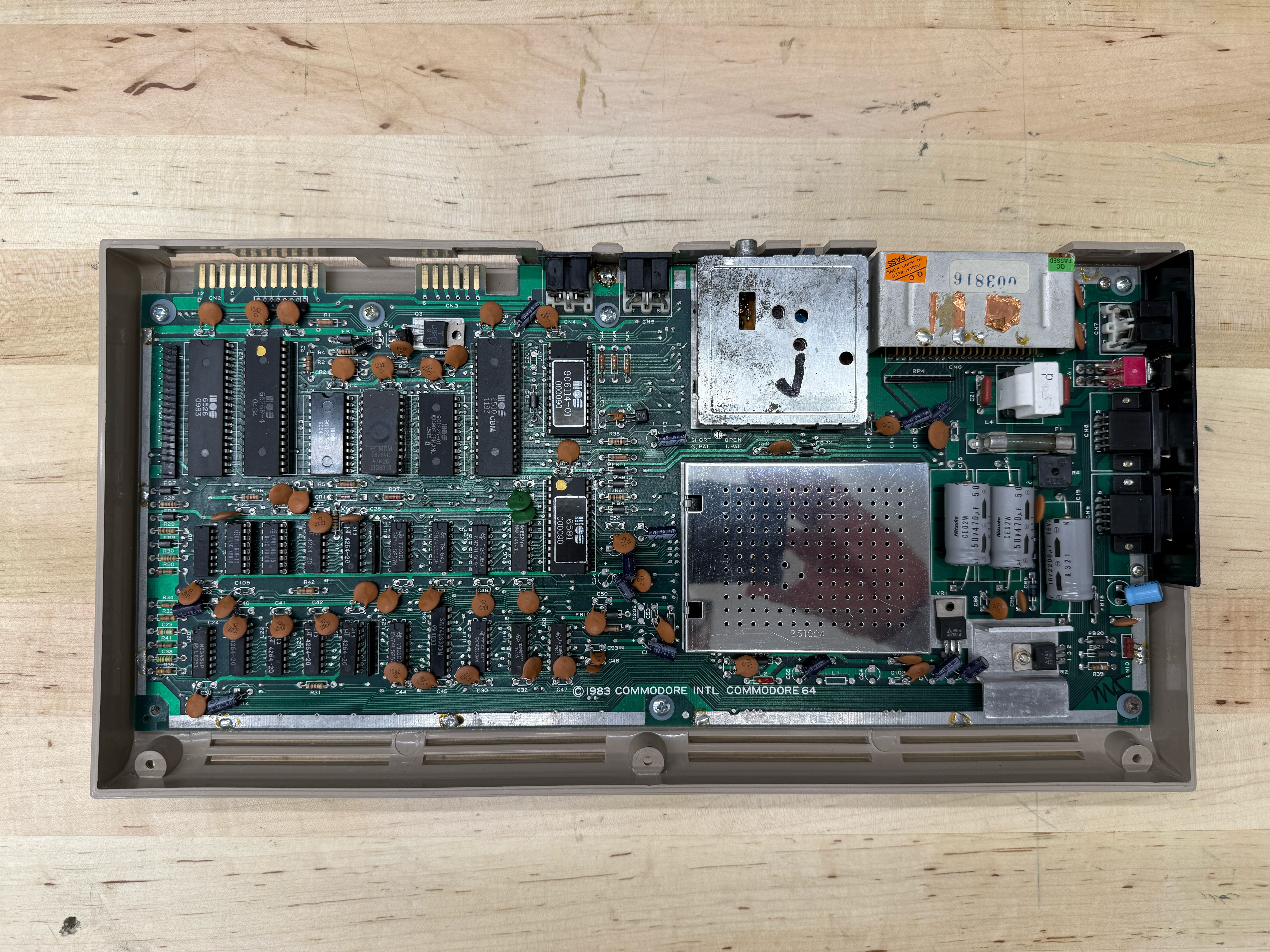
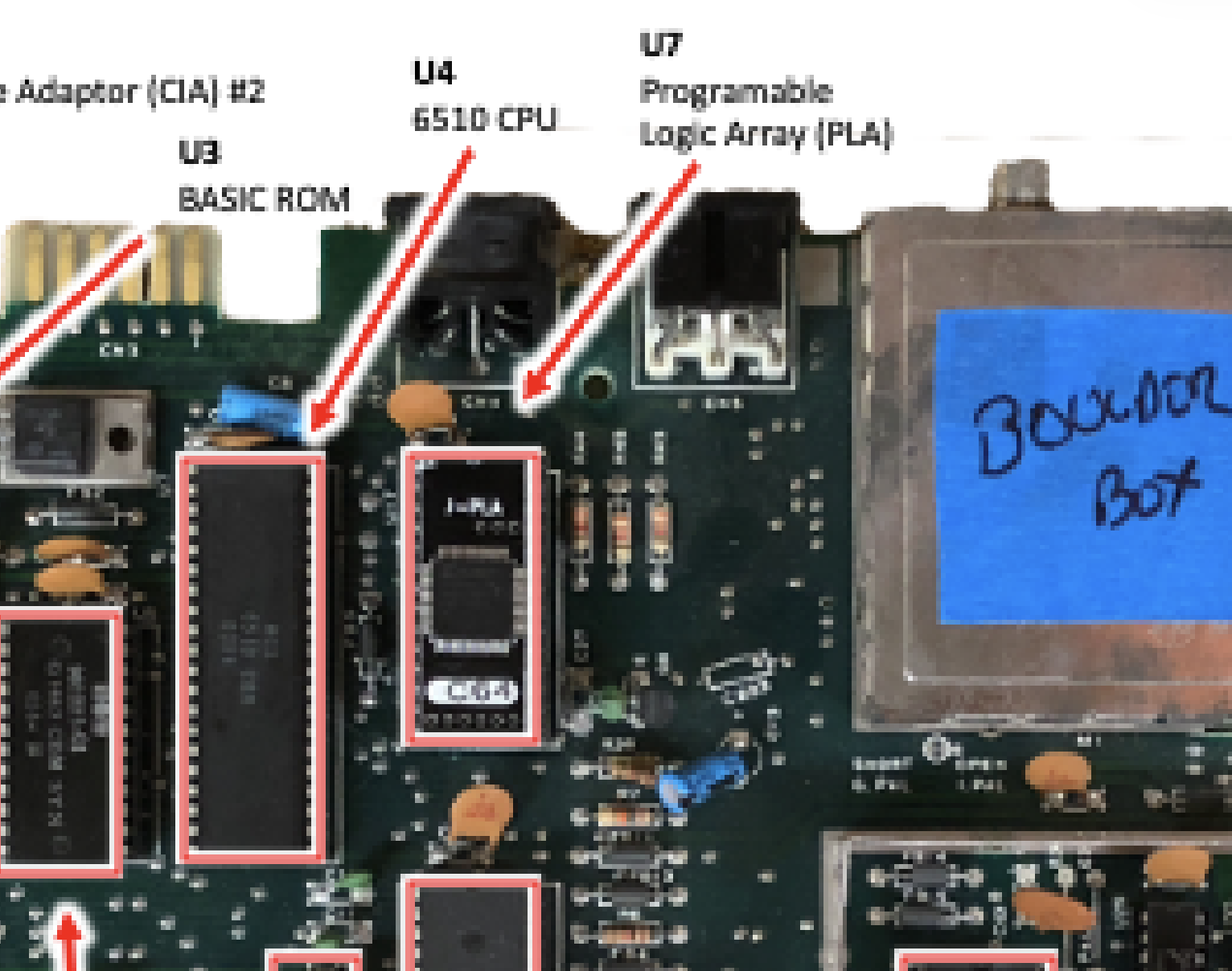
There isn’t much to say about my breadbin that I haven’t already said in other restoration write-ups. MOS 6510 at 1.023 MHz NTSC, 64K of RAM, the VIC-II video chip, a 6581 SID, and a pair of CIAs. The hardware is the platform. Every weird timing artifact, every raster trick the demoscene built a career on, every quirk of the SID’s analog filters: it’s all baked into physical silicon that came out of a fab in the early 1980s.
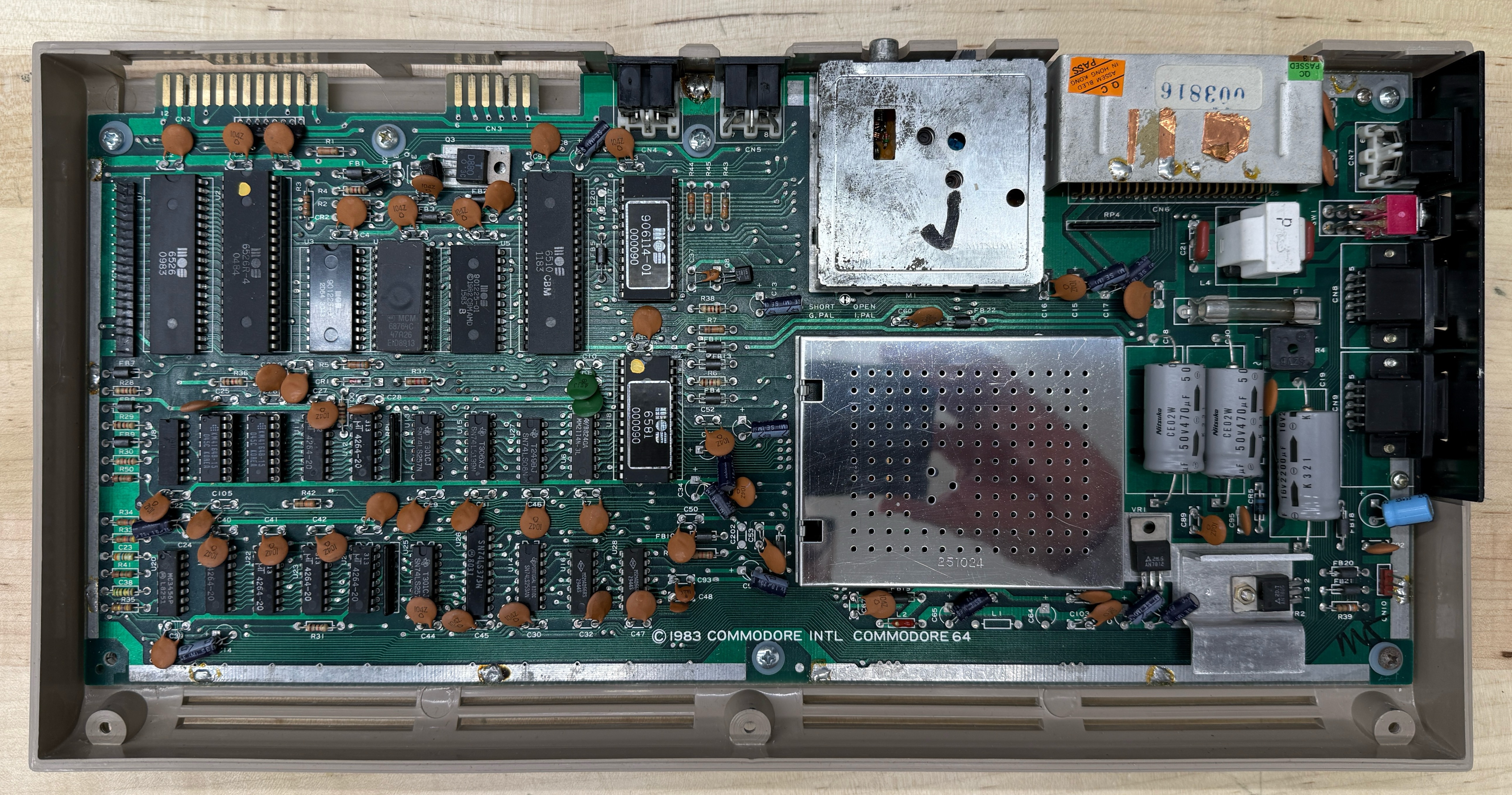
This is also why the platform is on borrowed time. The PLAs, SIDs, and CIAs all eventually fail. The “two-prong” power supply is famous for taking everything else with it when it finally lets go: the 7805’s ground tab fails after enough thermal cycling, and the regulator helpfully passes its unregulated input straight onto the 5V rail. I’ve recapped, socketed, and replaced enough chips to know that every working original C64 in 2026 is a small miracle held together by enthusiasts. That fact matters for what comes next.
For this comparison I hooked the C64 up to my 1701 using its separate chroma + luma RCA outputs into the dedicated Y/C inputs on the back of the monitor, not the composite input on the front. That path was genuinely unusual in the early 80s. The C64 was one of the few home machines of its era that broke the video signal out into separate luminance and chrominance, and the 1701/1702 was one of the few consumer monitors that accepted them on a pair of rear RCA jacks. It’s essentially S-Video before S-Video had a name (same idea, two RCA jacks instead of a 4-pin mini-DIN), and it produces a noticeably sharper, less-bleedy picture than composite. It’s the way the machine was meant to be used.
A Note on TheC64, then we'll set it aside
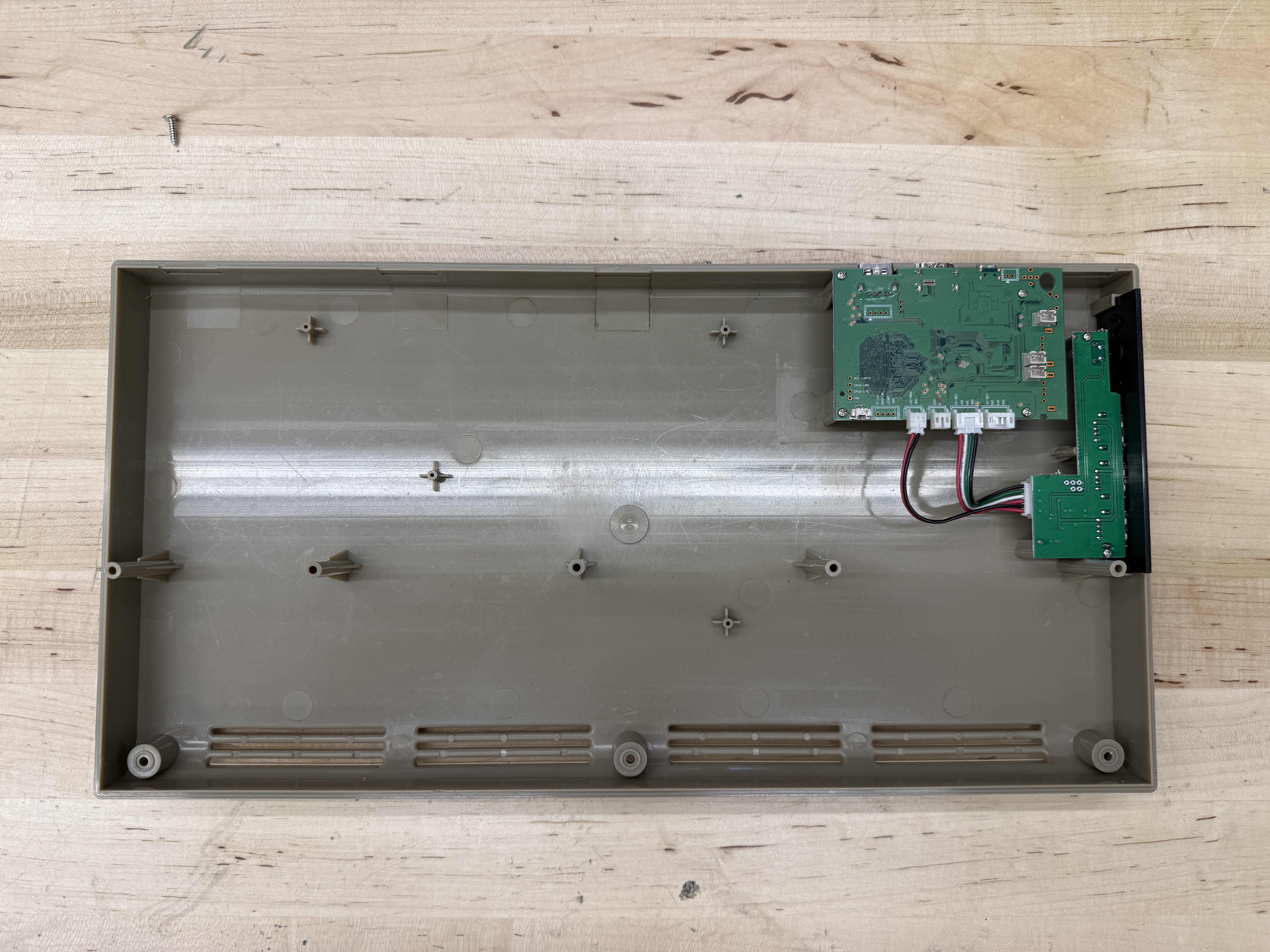
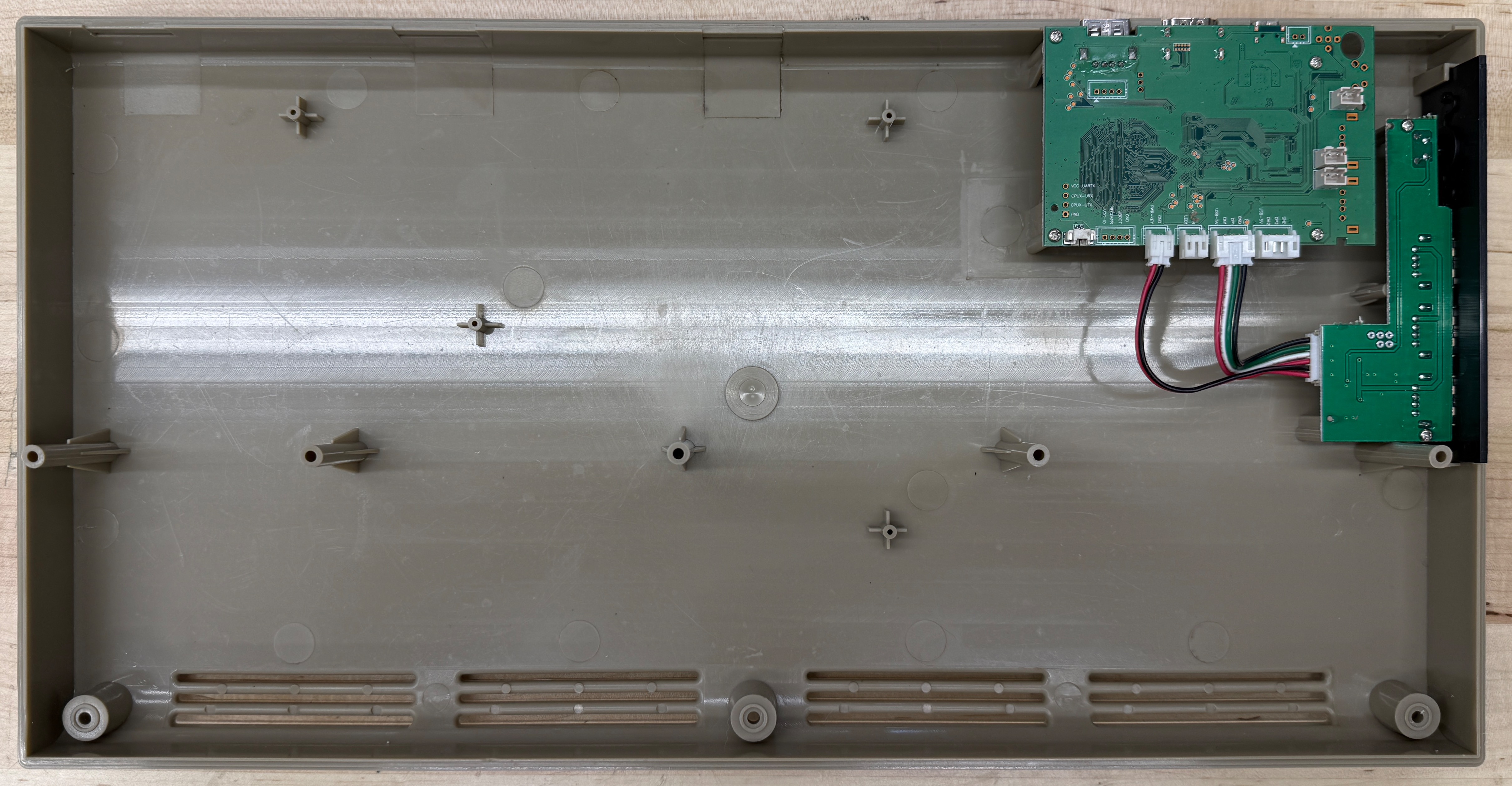
Retro Games Ltd. shipped TheC64 Mini in 2018 and the full-size TheC64 in 2019. Internally it’s an ARM SoC running Linux running a software emulator. No IEC, no expansion port, no user port, no cassette port. The joystick ports are USB pretending to be DE-9. You cannot plug in a 1541, a cartridge, or a real Competition Pro. HDMI out, a curated game library, save states, a passable keyboard.
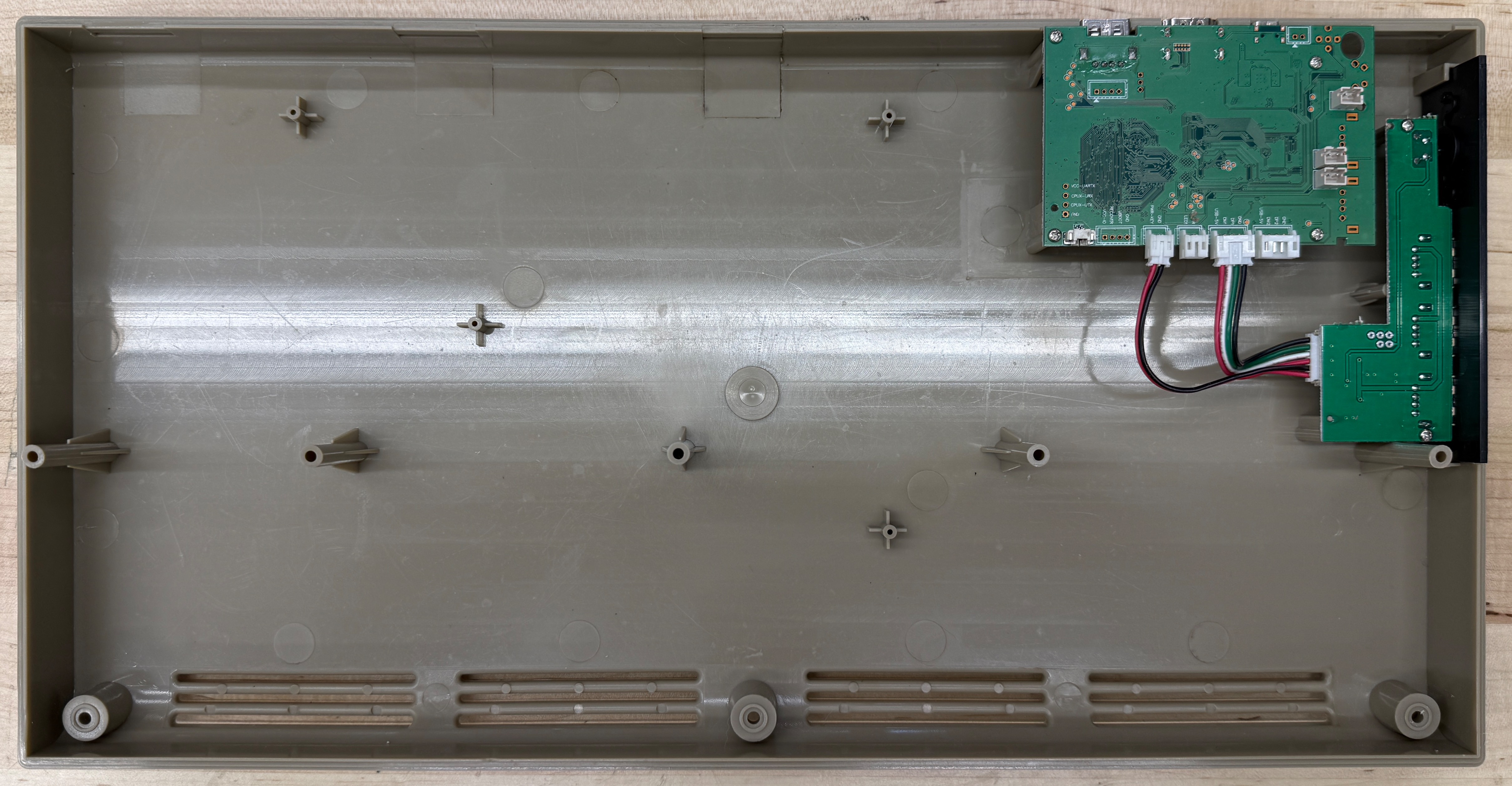
It’s a fine couch console for someone who just wants to play Boulder Dash with their kid. It is not a Commodore 64 in any sense the rest of this article cares about, and it isn’t part of the run-off. Lift the keyboard off and the photo above tells you why.
The Commodore 64 Ultimate — and why it isn't quite what the marketing suggests
This one is more interesting, and a lot of the interest is in the backstory.
In 2008 a Dutch engineer named Gideon Zweijtzer released the 1541 Ultimate, an FPGA cartridge that emulated a 1541 floppy drive accurately enough to fool copy protection. The Ultimate-II+ followed around 2016-2017. Somewhere in the early 2010s he built a full C64 in an FPGA as a personal experiment, decided it would never be economically viable as a product, and put the design in a box in his attic.

What pulled it back out, by his own account, was that the C64s coming back to him for cartridge support were increasingly broken. Original hardware was failing faster than the community could fix it. He started shipping the Ultimate 64 board in 2018, a complete FPGA replacement motherboard you could drop into a breadbin case, and refined it through the Elite and then Elite-II revisions. The Elite-II was the short-board version that became the de facto standard for serious builds. The engineering, top to bottom, is Gideon’s: close to two decades of careful FPGA work, mostly done alone.
What turned that work into something you can actually buy at retail was Christian Simpson, “Perifractic” of the Retro Recipes YouTube channel, whose investor group acquired Commodore Corporation B.V. and its 47 trademarks in 2025 and brought Gideon on as launch partner. The hard part of that wasn’t the case or the keyboard. It was tracking down the Commodore IP, building a company around it, sourcing manufacturing, and persuading Gideon to license his design through it. Without Perifractic, the Elite-II is still a bare board in a niche community. With him, it’s a finished machine in a proper case with a mechanical keyboard, a Commodore logo on the front, and distribution that puts it in front of people who would never have ordered a board from a Dutch hobbyist site. That’s a real piece of work, and it deserves credit alongside the engineering.
The deal underneath: the new Commodore licenses production from Gideon, and Gideon retains the IP. He has stopped selling his own Ultimate 64 boards as the Commodore version takes over, though the Ultimate-II+ cartridges remain his.
The Commodore 64 Ultimate is two decades of FPGA engineering by Gideon Zweijtzer, productized and brought to market by Christian Simpson and the new Commodore. It’s a proven design with a Commodore badge on it, and somebody finally doing the work to get it onto desks at scale.
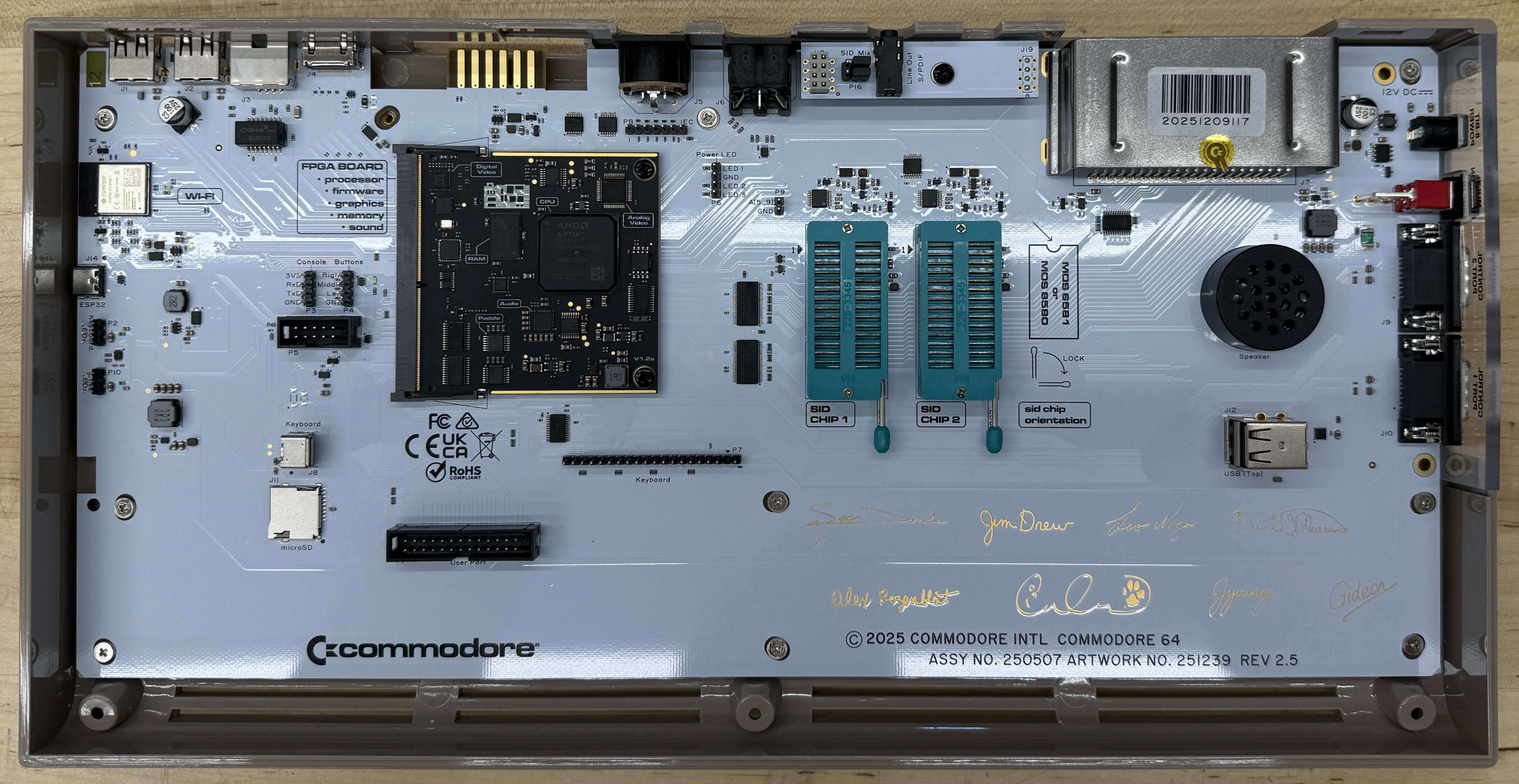
The hardware is an AMD Xilinx Artix-7 FPGA implementing gate-level recreations of the 6510, VIC-II, SID, and CIAs. 128 MB of DDR2 (16 MB system, 16 MB REU, 16 MB GeoRAM, plus headroom for a RAM disk), 16 MB of NOR flash, two physical sockets that accept real 6581 or 8580 SIDs if you want the analog character of original silicon (or, for that matter, a modern drop-in replacement like the ARMSID I put in my SX-64). Real IEC, cassette, and expansion ports; the user port lives on a header inside, with an optional breakout sold separately. HDMI plus DIN-8 analog out (CVBS, S-Video, RGB). Ethernet, Wi-Fi, USB, microSD. Turbo modes up to 64 MHz.
The business nobody thought existed
Gideon’s call that this wouldn’t fly as a product wasn’t wrong for his market. He was selling bare boards out of a Dutch hobbyist shop to people willing to find a case, source a keyboard, and probably solder. Those people exist, but there aren’t a lot of them.
What Perifractic worked out, and this is the genuinely commercial insight in the whole story, is that putting a Commodore badge on a finished machine is a different product entirely, with a different and much larger audience. People who would never order a bare PCB will happily buy a fully-built C64 with a real keyboard, a proper case, and a numbered serial sitting on the desk. That’s the bet, and he made it from his own pocket, a second mortgage on his house, on the strength of having read his audience right through ten years of Retro Recipes episodes.
The pre-orders confirmed the thesis quickly. By mid-August 2025, roughly a month after launch, the Commodore Computer Museum’s tracker showed over 7,200 units sold and $2.6M in pre-order revenue, on the way to a much larger total. A substantial chunk went to the $499 Founders Edition, capped at 6,400 numbered units, with gold-plated badges, a holographic serial sticker starting at 00000001, and a literal “share certificate” in the box. That’s not someone buying a computer; that’s someone buying a piece of revived Commodore history. A still-more-limited Gold Label sub-tier sold essentially on announcement.
The lineup has three editions: $299 BASIC Beige, $349 translucent Starlight, and $499 Founders. The FPGA inside is identical; what you’re choosing is how much you want the case to advertise itself. I felt guilty adding a bi-color LED to my SPARCstation IPC because it wasn’t there in 1990, so make of that what you will. The BASIC Beige is the one I’d take home, and Perifractic was smart to keep it in the lineup alongside the louder editions.
The risks are honest ones. The C64 Ultimate is a six-year-old FPGA design in a new case; for the company to keep going there has to be a second product, and a third. They’ve already announced a slimline C64C edition reusing the original 80s case tooling, which is a clever first follow-up to the same audience. The acquisition pointedly doesn’t include the Amiga trademark, which limits what comes after that. And there’s a separate trademark claimant in Italy hanging out in the background, which is probably noise but isn’t nothing.
The wacky thing about the whole story is that it isn’t marketing riding the brand. It’s an existing design Gideon thought wouldn’t sell, productized by a YouTuber who bet his house on having read his audience right. The pre-orders proved he had.
What surprised me actually using it
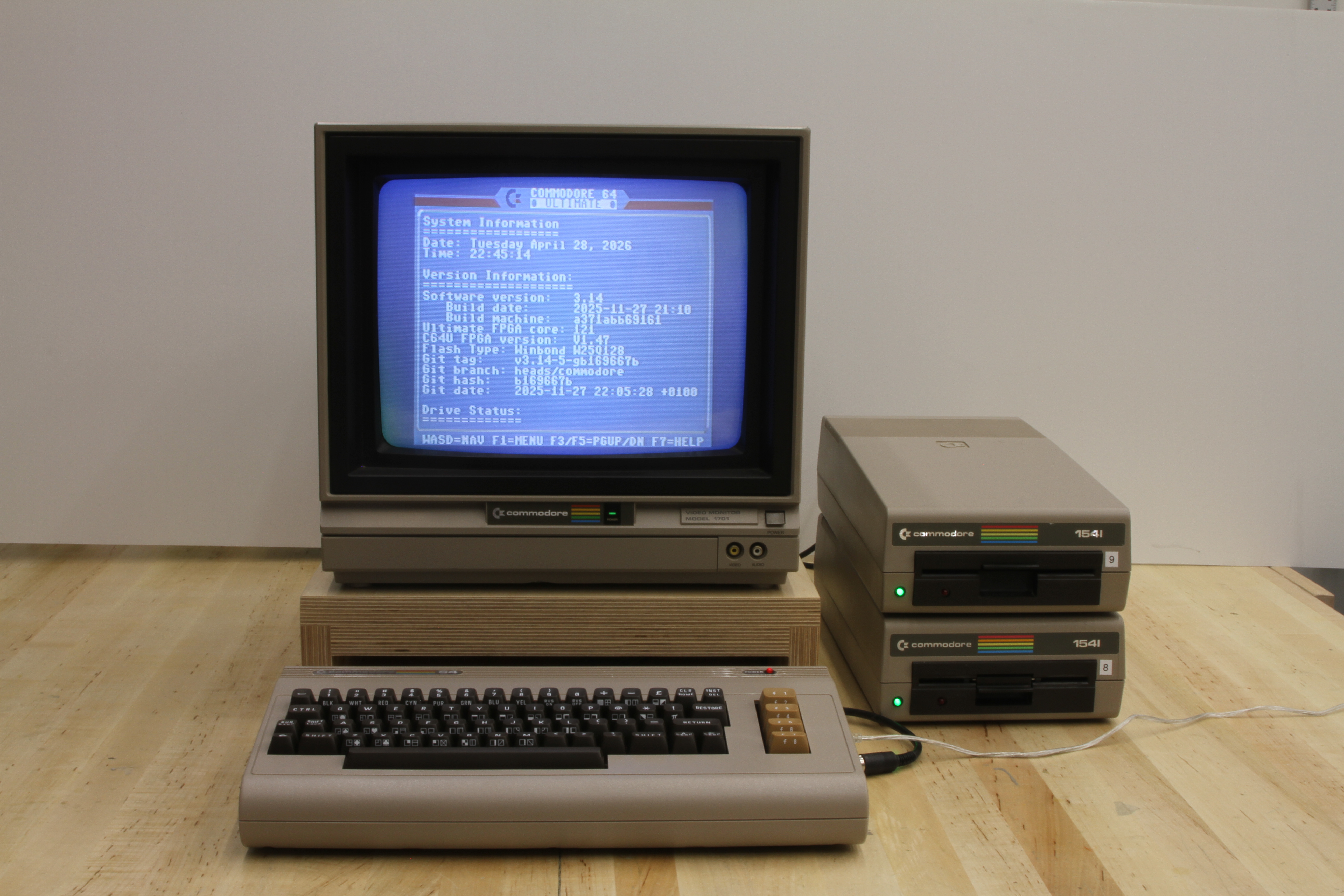
The keyboard is the best of the three. Better than TheC64, which I expected. Better than my original breadbin, which I did not. It’s a 66-key mechanical with Gateron Pro 3.0 switches in the standard Commodore layout. The original C64 keyboard has a particular feel that I have a lot of nostalgia for, but nostalgia is doing a lot of the work. The Ultimate’s keyboard is just objectively nicer to type and code on. N-key rollover doesn’t matter for most C64 software, but it’s there.
The video output to my 1701 is better than the original, too. I didn’t expect this either. Composite from the FPGA’s analog chain into the 1701 is cleaner than what comes out of my real C64. Sharper text, less color bleed on high-contrast borders, more stable image. The FPGA is generating clean signal from scratch instead of running it through forty-year-old discretes and a worn-out modulator path. If you care about the CRT experience, this matters.
Mine arrived set to PAL. Whether that’s the universal out-of-box state for US-market units or just a quirk of mine, I haven’t verified, but it took me a beat to figure out why the picture was colorless. In the process I accidentally set up video wrong, which leads me to the next item.
One piece of practical advice: set it up on HDMI first. If you mess up the video settings on analog out (wrong standard, wrong sync, whatever), there’s no easy way back into the configuration menu without working video. HDMI gets you a guaranteed picture on a modern display, you do your initial config and your NTSC switch there, and then you move it over to your 1701 or whatever CRT you’re using. For most people this is moot anyway, since most people will just use HDMI.
One last observation: on my HDMI monitor the image is stretched to fill the screen. On TheC64 the image from HDMI is letterboxed, which I found to be more accurate, but that’s a taste thing.
The Zaxxon test
I’m not a games person and never really was, even when the C64 was my daily driver. I was writing code on it, not playing on it. But you can’t write a comparison piece about three C64s without running something on them, and Zaxxon on a real 1541 floppy is a good honest test: fast scrolling, sprite multiplexing, SID music, classic disk loading. So I ran it on both the original and the Ultimate. (You can’t really run this test on TheC64. No floppy port to plug a 1541 into. Zaxxon isn’t in its built-in library either, though you could sideload it from a USB stick as a disk image. But that’s not the test.) Photos in the gallery below.
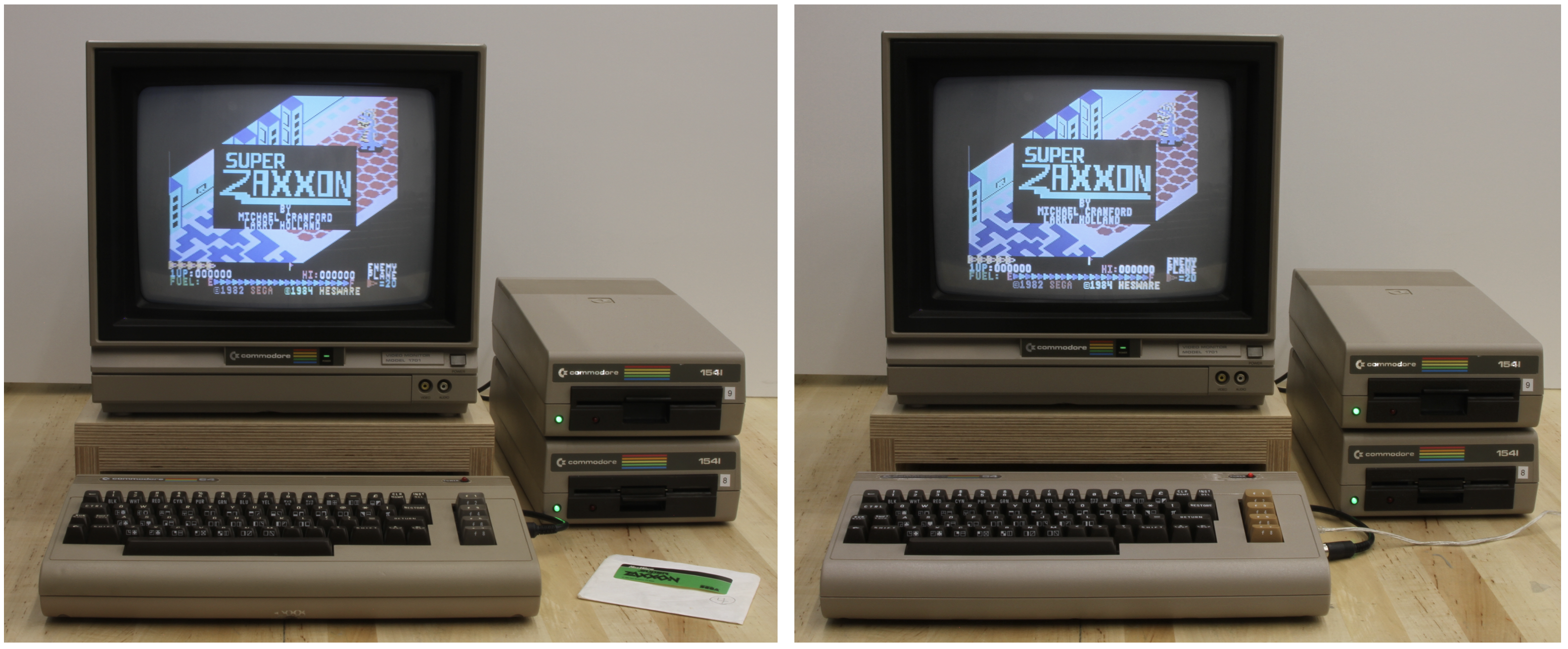
Both machines load it, both play it correctly, and both produce the SID soundtrack the way it should sound. On the Ultimate I’m using the FPGA SID core rather than a socketed real chip, and on the kind of test Zaxxon represents I genuinely cannot tell them apart in a blind A/B. Demoscene people will tell you there are edge cases where you can, and they’re probably not wrong, but for actual games this is a non-issue.
The interesting bit is that the Ultimate is happily talking to a real 1541 over IEC, reading a real floppy I’ve owned for forty years, and putting an arguably sharper picture on the same 1701 than the breadbin manages.
My Verdict
The original is the real thing and always will be. It’s also a finite resource, and every working one in 2026 is the result of someone like me putting work into keeping it alive. The PLAs, SIDs, and CIAs all eventually fail. The next time mine fails I’ll fix it again, but the trend line is clear. The Commodore 64 was an inexpensive machine to build at the time, and the parts are literally decaying in front of you.
The Commodore 64 Ultimate is something the retrocomputing world hasn’t really had before: a new-build machine that takes the original peripherals, runs the original software, looks the part, and is engineered to keep working long after the last MOS chip has died. It isn’t a replacement for the original any more than a ZuluSCSI is a replacement for a real Sun or Mac disk. The original is the artifact. The Ultimate is the working tool.
So the run-off is genuinely close, and I did not expect that going in. On the same 1701, with the same 1541, loading the same forty-year-old Zaxxon floppy, the Ultimate puts a cleaner picture on the screen, a better keyboard under my hands, and a SID I cannot distinguish from the real thing on anything I’d actually play (and if you want to drop a real SID in it, you can). The original wins on being the original. The Ultimate wins on everything else.
Honestly, machines like the 64 I rarely get out and do much with. But when I do, I’d reach for the Ultimate rather than risk another repair job on the breadbin.
The Ultimate is not inexpensive, but it’ll probably be around for as long as you will be. It comes with all the games you’re likely to want to play, so if that’s your deal it’s worth the price.
You just have to give some respect to this thing. It was a labor of love, and a perfect example of one guy setting out to build what he wanted and others noticing.
Further reading — the gamer's-eye view
Plenty of people have already written and filmed thorough gamer reviews. If that’s the angle you came for, start here:
- Modern Vintage Gamer — Commodore’s NEW Computer (YouTube) — two-week hands-on, ports tour, FPGA features, turbo mode, real-game tests. Best single video.
- Time Extension — The Gold Standard of Retro Computer Revivals — 9/10, balanced gaming + general-use review.
- TechRadar — nostalgic for a generation but a little daunting at times
- GamesRadar+ — the C64 remake enthusiasts deserve
- Tom’s Hardware review and the companion acquisition story.
- Hackster.io hands-on — best port-by-port detail.
- RetroRGB — FPGA-based Commodore 64 Ultimate
- CNX Software launch coverage — clean spec dump.
- RetroMagazine interview with Gideon Zweijtzer — the attic-and-FPGA backstory in his own words.
Gallery